TL;DR: The most common email marketing mistakes include buying email lists, ignoring subscriber expectations, sending the same message to everyone, skipping authentication and testing, building automations without exit conditions, neglecting inactive contacts, and measuring success mainly through opens. Avoiding these mistakes helps protect deliverability, relevance, customer experience, and marketing decisions.
Email marketing mistakes rarely begin with one disastrous campaign.
More often, small problems build quietly. The wrong audience keeps receiving promotions. A cart reminder reaches someone who already purchased. A campaign looks successful because people opened it, but few clicked or bought anything.
Email marketing has also become more demanding in 2026.
Mailbox providers expect responsible list practices, authentication, low complaint rates, and easier unsubscribing. At the same time, ecommerce businesses increasingly need to connect campaigns with customer behavior, automation, purchases, and revenue instead of treating email as an isolated channel.
If you need the fundamentals before troubleshooting individual mistakes, start with our complete guide to email marketing.
For everyone else, the first step is understanding where email marketing usually goes wrong.
The 5-Layer Email Mistake Check
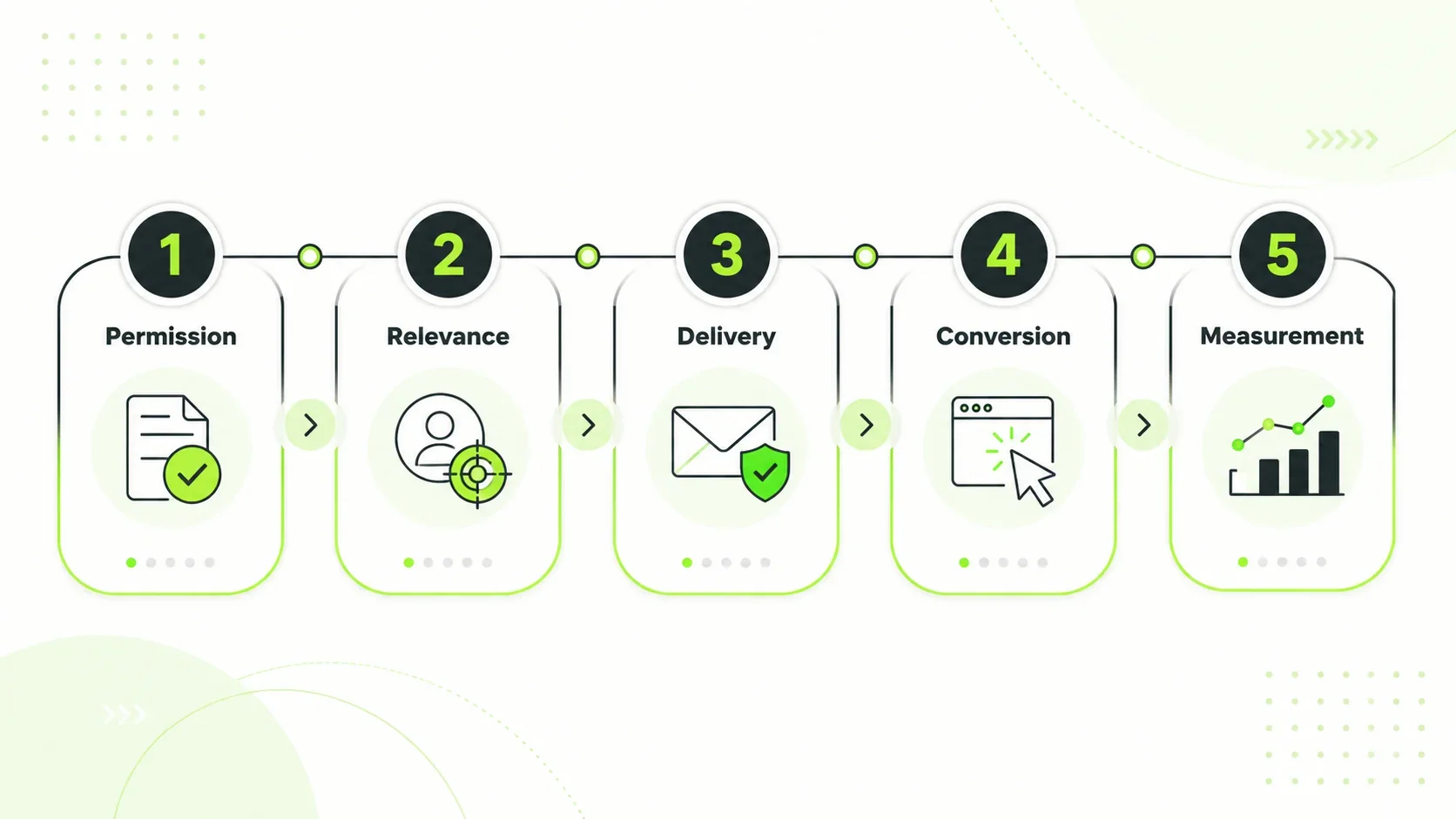
Email marketing problems become easier to diagnose when permission, relevance, delivery, conversion, and measurement are evaluated separately.
This guide groups common email marketing mistakes into five practical layers.
| Layer | Question to ask | Typical mistake |
| Permission | Should this person receive this email? | Purchased lists or unclear consent |
| Relevance | Is this message appropriate for this person? | Weak segmentation |
| Delivery | Can the message reliably reach the inbox? | Authentication or reputation problems |
| Conversion | Can the recipient easily take the intended action? | Weak CTA, design, or automation |
| Measurement | Do we know what happened afterward? | Judging success mainly by opens |
One mistake can affect several layers.
Buying an email list begins as a permission problem but can develop into a deliverability problem. Poor segmentation reduces relevance and may eventually increase unsubscribes. Faulty automation can damage both customer experience and conversions.
A quick diagnostic looks like this.
| Mistake | What can go wrong | First thing to fix |
| Buying email lists | Unwanted messages and poor audience quality | Build permission-based acquisition |
| Sending to everyone | Irrelevant campaigns | Segment and exclude |
| Missing authentication | Delivery problems | Review SPF, DKIM, and DMARC |
| Broken automation logic | Messages arrive at the wrong moment | Add conditions and exit rules |
| Measuring only opens | Weak decisions based on incomplete signals | Track downstream outcomes |
The remaining sections explain how these mistakes appear in real campaigns and what to do instead.
Permission Mistakes Damage the Relationship Before the Email Is Read
Permission-based email marketing starts with knowing why someone joined your list and what they reasonably expected to receive.
An email address does not automatically provide permission to send every type of marketing message.
Mistake 1. Buying Email Lists Instead of Building an Audience
Buying an email list gives you addresses, but it does not give you relationships with interested subscribers.
Someone on a purchased list may never have heard of your business. They may not understand why you contacted them, and they may not expect your marketing.
That creates a poor starting point.
Recipients may ignore the message, unsubscribe immediately, report it as spam, or question how their information was obtained.
Yahoo’s current sender best practices explicitly tell senders not to purchase mailing lists and recommend sending mail only to users who have specifically requested it.
Rules around purchased lists can also depend on jurisdiction. The UK’s ICO updated its electronic-mail marketing guidance in April 2026. Its guidance says that when an organization uses a bought-in list for electronic marketing, valid consent must cover the organization and the specific method of communication being used.
A stronger approach is to build your audience through legitimate customer relationships, newsletter forms, account registrations, purchases, resources, events, or other appropriate opt-in opportunities.
List size tells you how many contacts you have. Permission and relevance determine whether those contacts are worth emailing.
Mistake 2. Setting the Wrong Expectations When Someone Subscribes
Subscribers should have a reasonable idea of what they are joining and how often they may hear from you.
Imagine an ecommerce store promising a monthly product update.
Someone subscribes because that frequency feels useful. A few weeks later, a seasonal promotion starts and the store suddenly sends a sales email every morning.
The subscriber technically joined the list, but the experience no longer matches the expectation.
Clear signup messaging helps prevent this problem.
Explain what subscribers are likely to receive. Where frequency is predictable, communicate that too. Then make sure your normal campaign behavior broadly matches what was promised.
This also makes later decisions about frequency, preferences, and segmentation easier.
Mistake 3. Making Unsubscribing Unnecessarily Difficult
Making someone struggle to unsubscribe turns a normal preference change into a negative customer experience.
A recipient who no longer wants marketing should have a straightforward way to stop receiving it.
Google requires qualifying bulk senders to support one-click unsubscribe for marketing and subscribed messages and to include a clearly visible unsubscribe link. Yahoo also requires easy unsubscribe mechanisms for bulk promotional senders.
Legal requirements depend on the recipient and jurisdiction.
For US commercial email, the FTC’s CAN-SPAM compliance guide covers requirements including accurate sender information, non-deceptive subject lines, a postal address, and an opt-out mechanism.
An unsubscribe should not be treated as a marketing failure that needs to be prevented at all costs.
Sometimes subscribers simply want fewer messages or different communication. A preference option can help where appropriate, but a clear full-unsubscribe option should remain available.
Relevance Mistakes Make Legitimate Emails Feel Unwanted
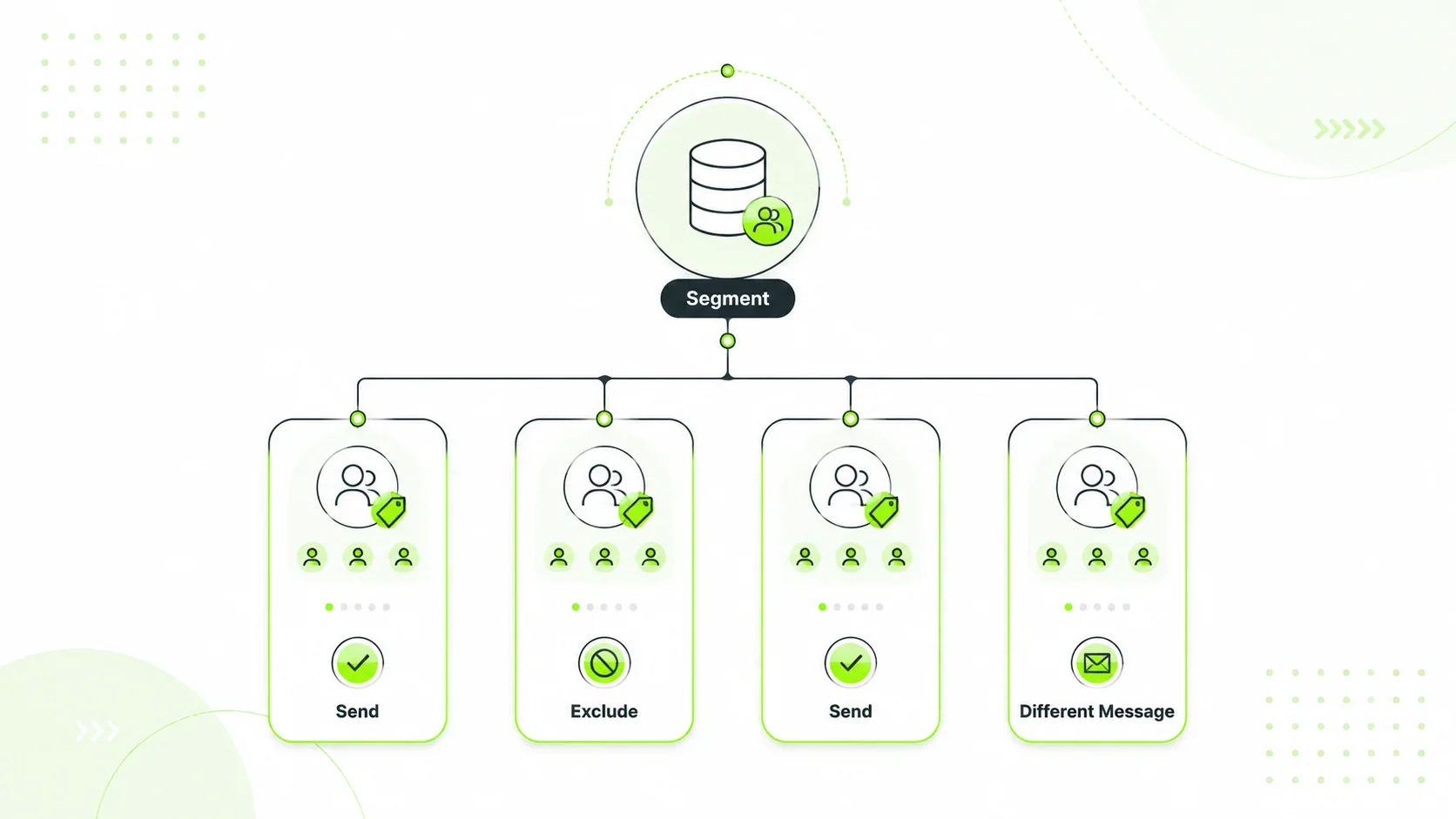
Relevant email marketing matches the message to the recipient’s situation instead of treating every contact as the same customer.
A professionally designed email can still fail when the wrong people receive it.
Mistake 4. Starting a Campaign Without a Clear Goal
A campaign without a clear objective makes audience selection, content, and measurement harder to get right.
Before creating the email, answer five questions.
- Who should receive it?
- Why should they care?
- What should they do next?
- Is this a campaign or part of an automated journey?
- What result would indicate success?
Consider an ecommerce store launching a new collection.
A recent buyer, an inactive subscriber, and someone who repeatedly browsed that product category may all exist in the same database. That does not mean the same campaign should automatically treat them identically.
The objective should guide the audience, message, CTA, timing, and metric.
For a deeper planning framework, see these 15 email marketing strategies for sales and repeat customers.
Mistake 5. Sending the Same Email to Every Subscriber
Sending one campaign to everyone ignores meaningful differences in customer behavior, interests, engagement, and lifecycle stage.
Suppose a customer bought a pair of running shoes yesterday.
Today, the store sends its entire database a campaign saying:
Still thinking about these running shoes?
The customer receives it because the marketer asked only one question.
Who should receive this campaign?
Better segmentation asks another.
Who should not receive it?
Useful segmentation may consider purchase history, engagement, interests, lifecycle stage, customer status, location, and legitimately collected behavioral data.
For ecommerce campaigns, exclusions may be just as valuable as inclusion rules.
You might exclude:
- recent purchasers
- customers who already redeemed an offer
- contacts already inside another incompatible workflow
- hard-bounced or suppressed contacts
- subscribers for whom the promotion is no longer relevant
Segmentation is not only about inclusion. Good segmentation also determines who should not receive the message.
Mistake 6. Treating a First Name as Meaningful Personalization
Adding a first name personalizes an email, but it does not make an irrelevant message relevant.
Compare these examples.
Basic personalization
Hi Sarah, check out this week’s products.
Behavior-based relevance
A customer who repeatedly explores a particular product category receives content or an offer connected with that interest.
The second email may still use Sarah’s name. The difference is that customer context changes the message.
Purchase history, customer stage, preferences, engagement, and appropriate behavioral signals can help marketers make better decisions.
This is where first-party data becomes useful.
First-party customer data is information collected directly through a business’s own customer relationships and interactions. In ecommerce, that may include purchases, customer status, campaign activity, and other appropriately collected behavioral signals.
Businesses using WordPress can explore this relationship in more depth in our WordPress email marketing guide.
Content and Sending Mistakes Reduce Campaign Effectiveness
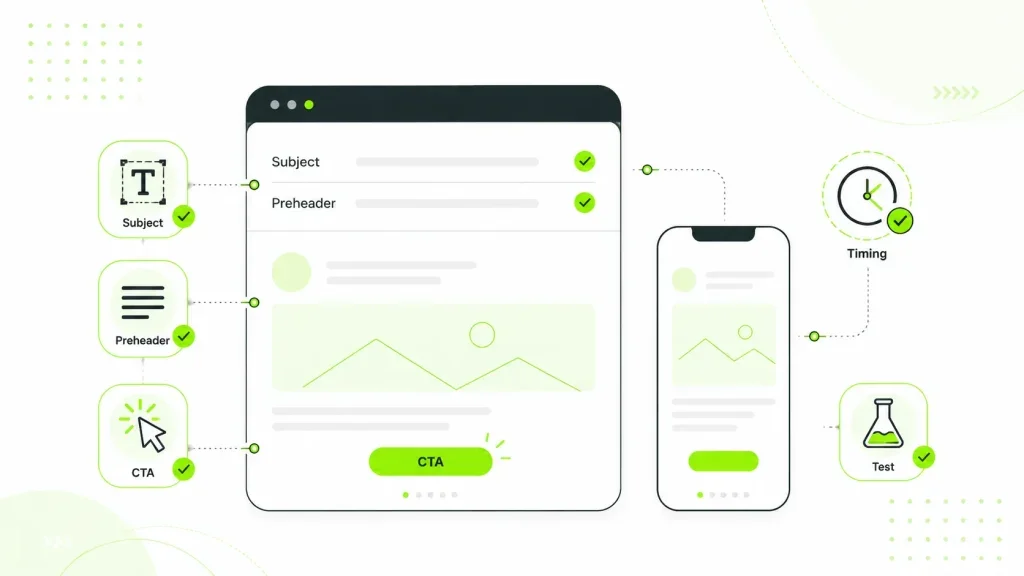
Email execution problems occur when the right audience receives a message that is confusing, difficult to use, poorly timed, or insufficiently tested.
Good execution makes the intended action easier.
Mistake 7. Using Weak Sender Details, Subject Lines, or Preheaders
The sender name, subject line, and preheader shape the subscriber’s first impression before the email body is opened.
Recipients should understand who is contacting them.
The subject line should create a reason to open without making a promise that the email cannot support.
The preheader should add useful context instead of simply repeating the subject line.
Avoid trying to manufacture opens through confusion.
The FTC prohibits deceptive subject lines for commercial email covered by CAN-SPAM, and Google’s sender guidance also warns against misleading message elements.
A misleading subject may generate curiosity once.
It does not create trust.
Mistake 8. Giving One Email Too Many Competing Goals
An email becomes harder to act on when several unrelated objectives compete for equal attention.
Imagine one ecommerce newsletter asking a customer to:
- buy a product
- read three articles
- answer a survey
- register for a webinar
- download a guide
- follow four social accounts
Every item may be useful by itself.
Together, they create a prioritization problem.
This does not mean every marketing email needs exactly one link. A product newsletter may legitimately link to several items.
A better principle is to define one primary conversion goal.
Supporting links can remain, but the design and copy should make the main action obvious.
Important information should also remain readable without depending entirely on one image. Clear text, useful hierarchy, understandable CTA labels, alt text, and mobile-friendly layouts make campaigns easier to use.
Mistake 9. Using a Fixed Frequency or Universal Best Time
No single sending frequency or clock time is automatically right for every email audience.
Sending too often can create subscriber fatigue.
Sending so rarely that people forget why they subscribed creates another problem.
The right frequency depends on subscriber expectations, message type, lifecycle stage, geography, engagement, and your own campaign results.
Timing works the same way.
A benchmark that says Tuesday morning is the best time to send an email may provide a hypothesis. It does not know how your customers behave.
Use your own data to test sensible sending windows instead of treating industry averages as universal rules.
Mistake 10. Testing Only the Subject Line
Pre-send testing should check the subscriber’s entire journey, not only whether subject line A performs better than subject line B.
Speed is becoming a bigger part of modern email production.
Litmus’ State of Email 2026 surveyed 500 marketing professionals and reports that 78% of teams now produce and deploy an email in three days or less. Faster production makes a reliable quality-control process more important, not less important.
An ecommerce email can have an excellent subject line and still fail because:
- a coupon expired
- a button points to the wrong product
- personalization has no fallback
- a dynamic product field breaks
- the mobile layout is difficult to use
- tracking parameters are missing
Before a significant campaign goes out, check:
- sender information
- subject and preheader
- personalization fallbacks
- links and buttons
- mobile rendering
- images and alt text
- coupon codes
- dynamic customer or product data
- tracking
- unsubscribe behavior
- automation conditions
A useful testing path follows the same journey as the subscriber.
Inbox → Email → Click → Destination → Intended action
Subject-line testing is only one part of that process.
Deliverability Mistakes Can Prevent Good Emails From Reaching the Inbox
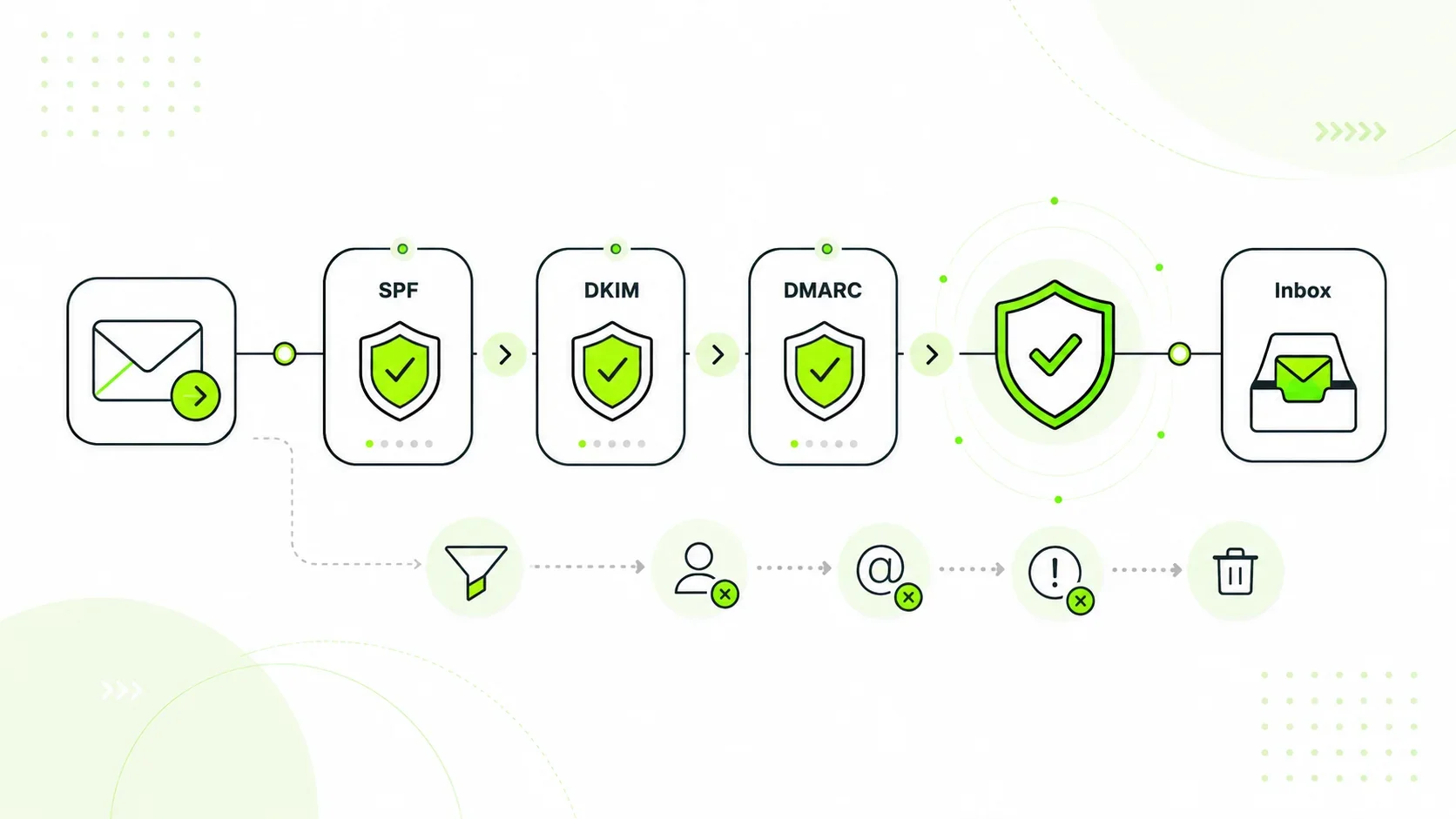
Email deliverability depends on technical authentication, list quality, complaint levels, and responsible sending behavior.
Good copy cannot compensate for weak infrastructure or an unhealthy contact list.
Mistake 11. Ignoring Email Authentication and List Hygiene
SPF, DKIM, DMARC, bounce management, complaints, and list quality are now basic parts of responsible email sending.
Google’s current sender requirements say that senders to personal Gmail accounts must use SPF or DKIM. Senders sending around 5,000 or more messages to Gmail accounts within 24 hours are treated as bulk senders and face additional requirements including SPF, DKIM, DMARC, alignment, and one-click unsubscribe for marketing messages.
Google also recommends keeping user-reported spam rates below 0.1% and preventing them from reaching 0.3% or higher. Google states that complaint rates above 0.1% can already negatively affect inbox delivery for bulk senders.
Yahoo requires SPF or DKIM for all senders. Its bulk-sender requirements include SPF, DKIM, DMARC, easy unsubscribe, and a spam complaint rate below 0.3%.
Those numbers make one thing clear.
Permission and relevance are also deliverability concerns.
Sending unwanted messages can eventually become an infrastructure problem.
List hygiene matters for the same reason. Invalid addresses, repeated bounces, inactive contacts, and subscribers who no longer expect the email should not be treated as equally healthy recipients forever.
A practical re-engagement process may look like this.
Identify inactivity → send relevant re-engagement → evaluate response → suppress or remove where appropriate
For a deeper technical explanation, read why WordPress emails go to spam.
You can also compare the best WordPress SMTP plugins if the sending infrastructure itself needs attention.
Automation Mistakes Create Contextually Wrong Messages
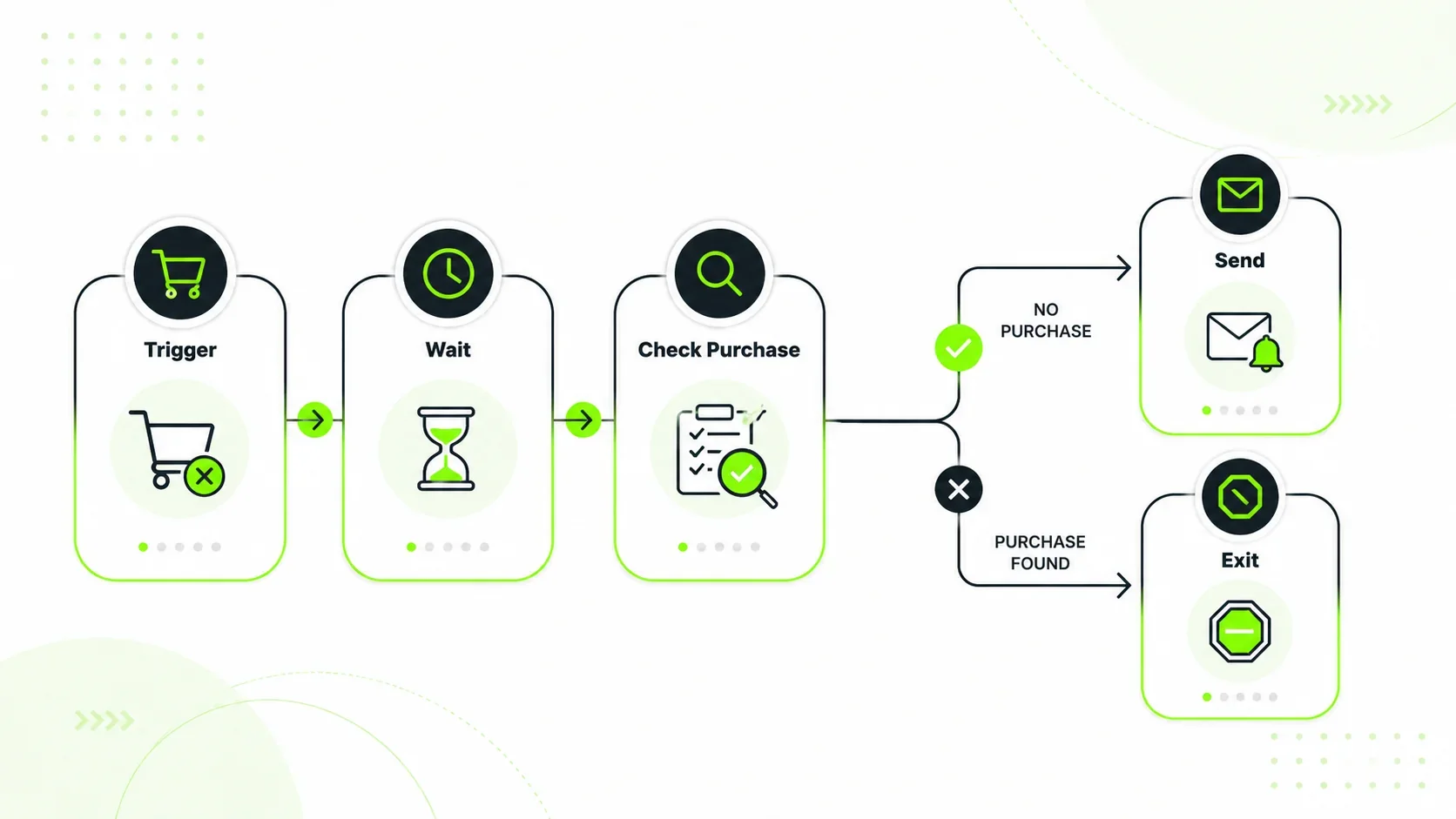
Email automation fails when a workflow keeps acting on old information after the customer’s situation has changed.
Automation should respond to current customer state rather than blindly continue because a timer started.
Mistake 12. Ignoring the Customer Lifecycle
Sending only standalone promotions overlooks moments when a lifecycle message may be more useful than another broadcast.
A simplified ecommerce journey might look like this.
Subscriber → interested shopper → first-time buyer → repeat buyer → inactive customer
Different stages create different communication needs.
Examples may include:
- welcome emails
- browse or cart recovery
- post-purchase information
- relevant cross-sell communication
- review requests
- replenishment reminders where appropriate
- win-back campaigns
- re-engagement
The goal is not to automate every interaction.
Automation becomes useful when customer state changes what message should be sent.
A shopper who completed an order should not continue being treated as someone who is still deciding whether to purchase.
Our ecommerce email marketing guide covers lifecycle campaigns, retention, cart recovery, and customer behavior in greater depth.
Mistake 13. Building Automations Without Exit Conditions
A useful automation needs a trigger, conditions, actions, and a clear way to stop when the original situation no longer exists.
Suppose a shopper abandons a $90 cart.
The automation waits and schedules a reminder.
Two hours later, the shopper returns through another channel and completes the purchase.
If the workflow remembers only the original cart event, another email may arrive the next morning.
You left something behind.
The customer did not leave anything behind.
They already paid.
A better workflow checks current customer state before continuing.
Trigger → condition → action → conversion check → exit
Automation conflicts can create another problem.
One person may qualify for a welcome sequence, cart-recovery campaign, seasonal promotion, and post-purchase workflow in the same period.
Exclusions, conditions, and workflow priorities can reduce contradictory messages.
This is also where marketing infrastructure matters.
WordPress and WooCommerce businesses can create unnecessary complexity when CRM data, ecommerce activity, campaigns, and automation live in disconnected systems. Readers evaluating their stack can compare the best email marketing tools for WooCommerce to understand the available approaches.
A WordPress-native platform such as NextCRM takes a different approach by keeping CRM, segmentation, email automation, and customer intelligence closer to WordPress and first-party customer data.
The principle remains the same regardless of platform.
Automation should respond to what the customer has done now, not only to what they did when the workflow started.
Measurement Mistakes Can Make Weak Campaigns Look Successful
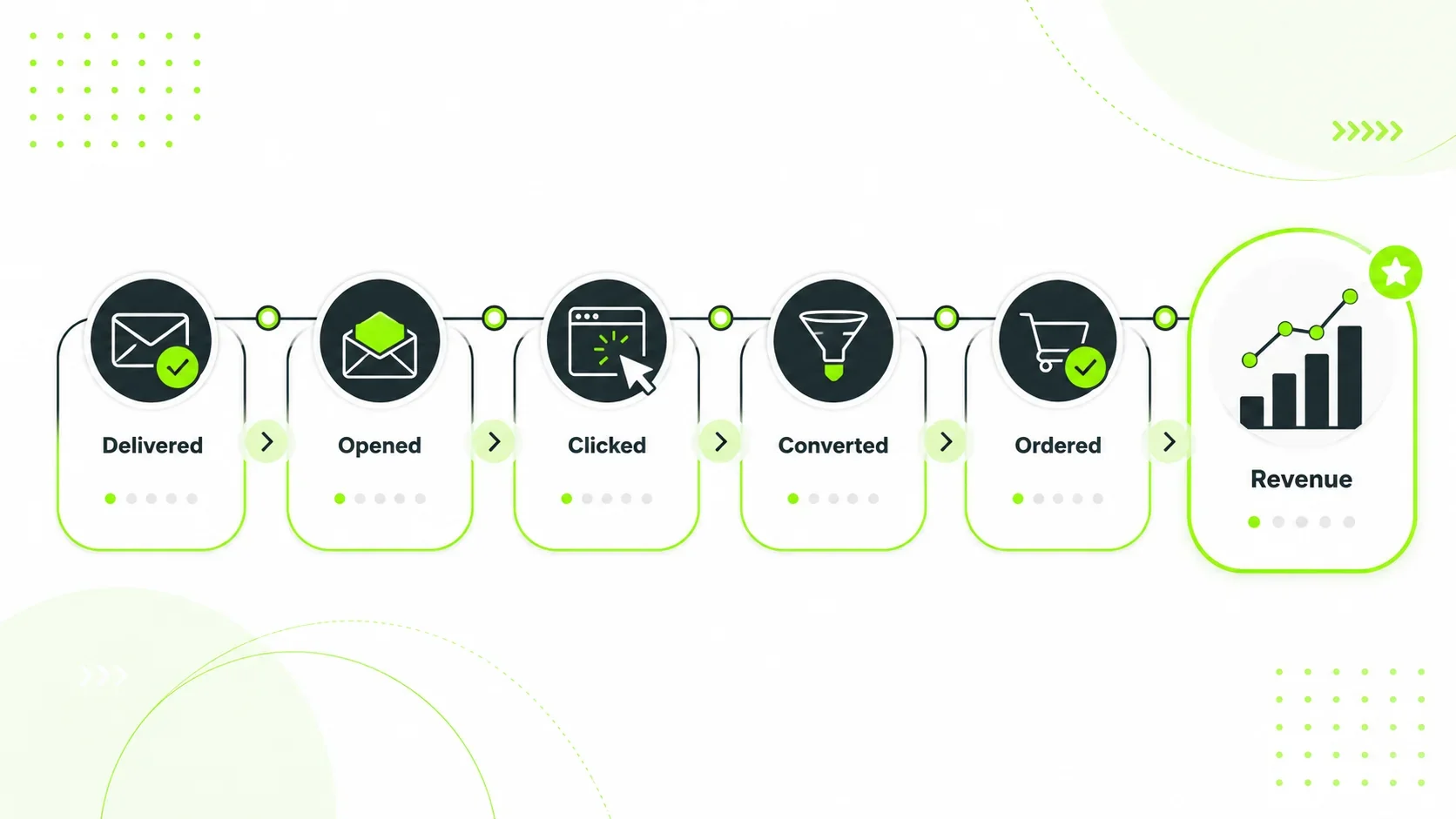
Email measurement should show whether the campaign achieved its intended outcome instead of stopping at the first available engagement metric.
An open and a purchase do not represent the same level of customer action.
Mistake 14. Treating Open Rate as the Main Measure of Success
Open rate can provide engagement context, but it should not be treated as a complete measure of human attention or commercial performance.
Open tracking has technical limitations.
Apple’s Mail Privacy Protection can privately download remote content in the background when an email is received instead of waiting until the recipient views it. This prevents senders from reliably learning certain viewing activity from protected users.
That does not mean marketers should delete open-rate reporting.
It means opens need context.
For an ecommerce campaign, the measurement path might look like this.
Delivered → Opened → Clicked → Converted → Ordered → Revenue
Each stage answers a different question.
An open can indicate inbox activity, subject to tracking limitations.
A click shows stronger interaction.
A conversion or order sits closer to the commercial objective.
For ecommerce email, an open is an engagement signal. An order is a business outcome.
Mistake 15. Failing to Connect Email Activity to Conversions and Revenue
Campaign reporting becomes more useful when email engagement is connected to the outcome the campaign was designed to produce.
Imagine two campaigns.
| Campaign | Engagement | Business outcome |
| Campaign A | Higher opens and clicks | Fewer purchases |
| Campaign B | Lower opens and clicks | More purchases |
Which one performed better?
The answer depends on the goal.
If the objective was ecommerce revenue, Campaign B may deserve more attention even though its inbox metrics looked weaker.
Useful outcome measures can include:
- clicks
- conversions
- attributed orders
- campaign revenue
- revenue per recipient
- recovered-cart revenue
- repeat purchases
- unsubscribes
- complaints
Attribution is rarely perfect.
A customer may see an email, return later through another channel, compare several products, and purchase afterward.
Marketing analysis should not pretend that every purchase has one perfectly isolated cause.
The goal is to connect campaign activity with enough customer and order context to make better decisions.
That is one reason first-party ecommerce data matters. When campaign activity, customer state, and purchase outcomes can be considered together, marketers gain a clearer view of what happened after Send.
A healthy campaign process continues after distribution.
Plan → Send → Measure → Learn → Improve
Pressing Send ends distribution. It does not end the marketing work.
Email Marketing Mistakes Checklist
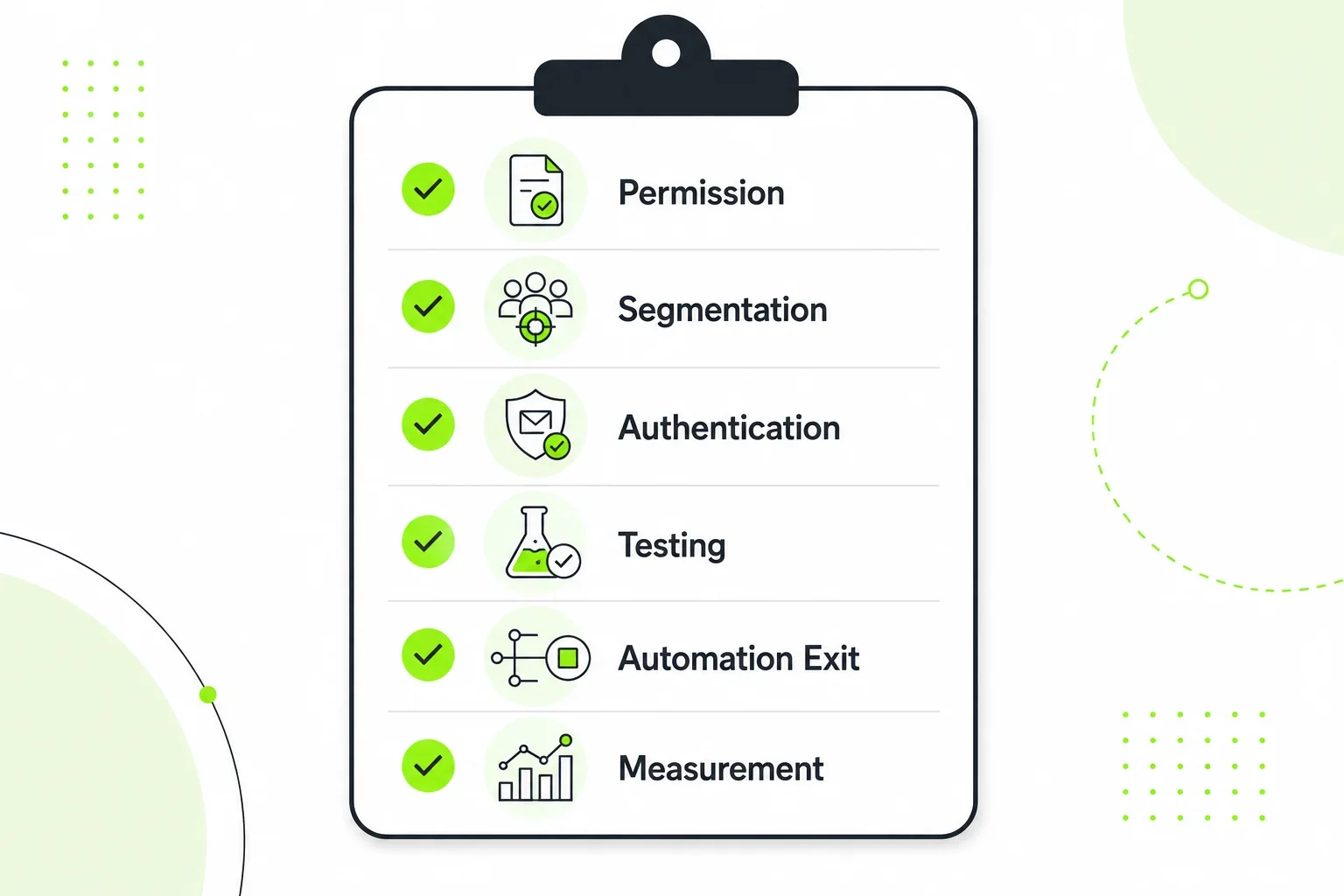
A practical email marketing checklist should verify permission, relevance, delivery, conversion, and measurement before a campaign is treated as complete.
Use this checklist before your next significant send.
- The campaign has one clear objective.
- Recipients have a legitimate reason to receive the message.
- The email matches expectations created during signup.
- Relevant audience segments have been selected.
- Necessary exclusions and suppressions have been applied.
- Personalization adds meaningful relevance where appropriate.
- Sender identity, subject line, and preheader are clear.
- The email has an obvious primary conversion goal.
- Links, buttons, coupons, and dynamic content work.
- Mobile rendering and important visual elements have been checked.
- Sending frequency is reasonable for the audience.
- Timing assumptions have been tested.
- SPF, DKIM, DMARC, and applicable sender requirements have been reviewed.
- Invalid and inactive contacts are handled appropriately.
- Automations check current customer state before continuing.
- Workflows include appropriate exit conditions.
- Conflicting automations are prevented where possible.
- Campaign performance is not judged by opens alone.
- Downstream actions such as clicks, conversions, and orders are reviewed.
- Results will inform the next campaign.
The purpose of the checklist is not to make every email perfect.
It is to stop preventable mistakes from becoming routine.
Frequently Asked Questions About Email Marketing Mistakes
The most useful questions about email marketing mistakes focus on permission, relevance, deliverability, timing, automation, and measurement.
The most common email marketing mistakes include buying lists, unclear subscriber expectations, poor segmentation, weak personalization, misleading or ineffective subject lines, inconsistent sending, insufficient testing, weak authentication, neglected list hygiene, faulty automation, and measuring performance mainly through opens rather than meaningful downstream outcomes.
Buying an email list provides contact information without guaranteeing that the recipients requested communication from your organization. This can result in irrelevant messages, complaints, consent issues, and sender-reputation problems. Yahoo’s current sender guidance specifically advises against purchasing mailing lists.
Email marketing mistakes can hurt deliverability when they generate complaints, repeatedly target invalid or uninterested recipients, ignore authentication requirements, or make unsubscribing difficult. Google recommends keeping user-reported spam below 0.1% and preventing it from reaching 0.3% or higher.
There is no universal email frequency that works for every business. A suitable cadence depends on what subscribers expected, campaign purpose, customer lifecycle stage, engagement, and testing. Businesses should monitor downstream results and complaints instead of blindly copying an industry-wide sending schedule.
Open rate can provide directional information, but it is not a precise measure of human attention or commercial success. Privacy features such as Apple Mail Privacy Protection can affect what an apparent open means. Clicks, conversions, orders, and revenue provide additional context.
Yes. A cart-recovery workflow should check whether the relevant purchase has already occurred before sending another recovery message. Without an exit or conversion condition, customers can continue receiving reminders for orders they already completed.
The 80/20 rule does not have one standardized meaning in email marketing. Some marketers apply the broader Pareto principle to results, while others use 80/20 as an informal content-planning guideline. It is better treated as a planning concept than as an official email marketing rule.
The 5 Ts are not one universally standardized email marketing framework. Different marketers use different terms for the five elements. Established practices such as targeting, permission, timing, testing, tracking, and relevant content are more useful than treating one unofficial version as an industry rule.
Avoiding Email Marketing Mistakes Requires Better Decisions, Not More Email
Avoiding email marketing mistakes comes down to sending appropriate messages to appropriate people and learning from what happens afterward.
A healthy email program begins with permission.
It improves through relevance.
It depends on reliable sending infrastructure.
It converts through clear messages and customer-aware journeys.
It gets smarter through meaningful measurement.
For ecommerce businesses, this means looking beyond isolated newsletters. Customer lifecycle, segmentation, exclusions, automation conditions, purchases, and revenue all provide context that basic send-and-open reporting cannot provide by itself.
WordPress and WooCommerce businesses should also consider whether their marketing infrastructure helps or blocks that visibility. When customer information, store activity, CRM data, campaigns, and automations are spread across disconnected systems, understanding the complete journey becomes harder.
That is where a WordPress-native email marketing and CRM approach can make sense for businesses that want customer and marketing workflows closer to their first-party website data.
Whatever platform you use, the practical rule remains simple.
Send the right message to the right person for the right reason, stop when the context changes, and measure what happened next.