WooCommerce powers millions of ecommerce websites, but its built-in email system focuses mainly on transactional messages such as order confirmations and shipping notifications. These emails are essential for customer communication, yet they do not support marketing automation or lifecycle campaigns.
Email marketing continues to be one of the most effective digital marketing channels. According to HubSpot research, email marketing generates an average return of about $36 for every $1 spent, making it one of the highest ROI marketing strategies available.
For WooCommerce businesses, dedicated email marketing tools allow store owners to automate campaigns, segment customers based on behavior, and increase repeat purchases.
In this guide, we explore the best email marketing tools for WooCommerce in 2026, explain key features, and help you choose the right platform for your ecommerce business.
Quick Answer: Best Email Marketing Tools for WooCommerce
If you want a quick answer, these are some of the best WooCommerce email marketing tools available in 2026.
| Tool | Best For | Key Advantage |
| NextCRM | WordPress native automation | Full control of customer data |
| Omnisend | Ecommerce automation | Prebuilt automation workflows |
| Klaviyo | Data driven marketing | Advanced segmentation |
| Mailchimp | Beginner friendly marketing | Large ecosystem |
| MailPoet | WordPress newsletters | Native WordPress integration |
| Brevo | Email and SMS marketing | Multi channel communication |
| ActiveCampaign | Advanced marketing automation | Built in CRM features |
These platforms help WooCommerce businesses automate customer communication, recover abandoned carts, and increase customer lifetime value.
Why WooCommerce Stores Need Email Marketing Tools
WooCommerce automatically sends transactional emails related to orders and shipping. These emails help customers track purchases, but they do not support marketing automation or long term customer engagement strategies.
Dedicated email marketing tools allow ecommerce stores to implement campaigns that encourage repeat purchases and increase customer lifetime value. Instead of sending one time newsletters, businesses can build automated workflows that communicate with customers based on behavior.
Common ecommerce use cases include:
- abandoned cart recovery
- post purchase follow up emails
- product recommendation campaigns
- loyalty and retention programs
- re engagement campaigns for inactive customers
Automation plays a major role in ecommerce marketing performance. According to HubSpot research, automated email campaigns generate higher engagement and consistent revenue compared to manual campaigns.
In real ecommerce operations, lifecycle email automation often becomes one of the most reliable revenue channels once workflows are configured. Abandoned cart reminders, post purchase recommendations, and retention campaigns can continue generating sales without ongoing advertising costs.
Key Features to Look for in WooCommerce Email Marketing Tools
Not all email marketing platforms offer the same capabilities. WooCommerce businesses should evaluate several important features before choosing a solution.
WooCommerce Integration
The platform should integrate directly with WooCommerce and synchronize customer data, orders, and product information automatically. A strong integration ensures that customer activity such as purchases, browsing behavior, and cart updates can trigger marketing campaigns without manual data imports or complicated setup.
Email Automation Workflow
Automation workflows allow ecommerce stores to communicate with customers at the right moment. For example, businesses can create abandoned cart reminders, product recommendation emails, and win back campaigns using tools that support WooCommerce email automation workflows.
Customer Segmentation
Customer segmentation allows businesses to send personalized campaigns based on customer behavior or purchase history. Many WooCommerce store owners prefer using a WordPress based email automation platform like NextCRM that integrates directly with their website and customer data.
Email Templates
Professional templates allow businesses to design campaigns quickly without requiring design expertise. A good platform should provide customizable email templates that support product images, promotional offers, and dynamic content pulled directly from the WooCommerce store.
Campaign Analytics
Analytics dashboards help track performance metrics such as open rates, click rates, and campaign generated revenue. These insights allow store owners to understand which campaigns perform best and optimize future email marketing strategies.
Deliverability Infrastructure
Reliable email infrastructure ensures marketing campaigns reach customer inboxes instead of spam folders. Platforms with strong deliverability systems typically include sender reputation management, authentication protocols, and monitoring tools that help maintain high email delivery rates.
Pricing Model
Some platforms charge based on subscriber count, while others use license based pricing models that provide more predictable costs.
Best Email Marketing Tools for WooCommerce in 2026
The following platforms represent some of the most widely used email marketing solutions among WooCommerce businesses.
NextCRM
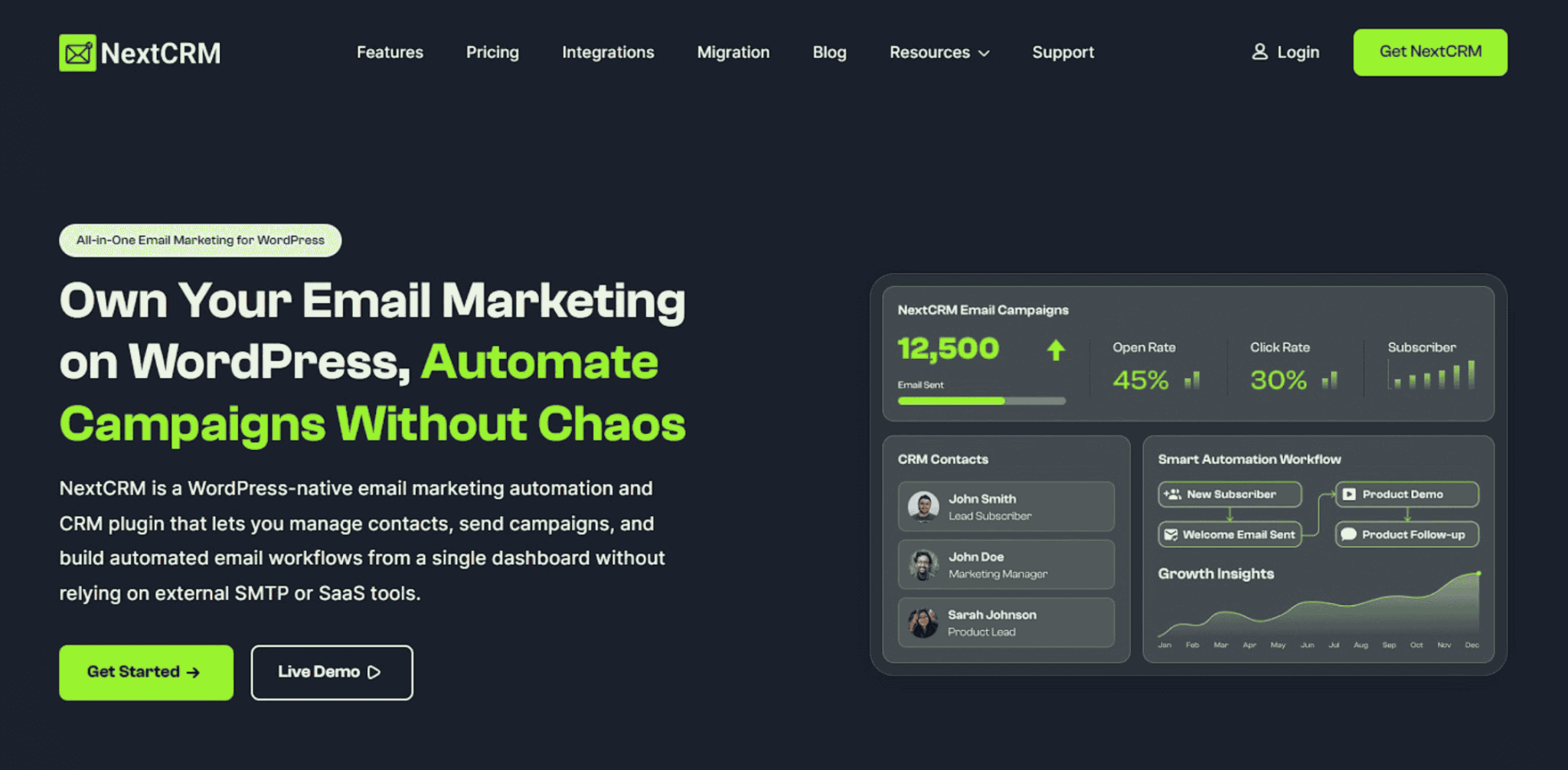
NextCRM is a WordPress native email marketing and automation platform designed for businesses that want full control over their customer data and marketing workflows. Instead of relying on external SaaS infrastructure, the platform operates directly inside the WordPress environment.
This approach allows WooCommerce stores to build campaigns triggered by customer behavior such as purchases, browsing activity, or engagement history. Businesses that prioritize data ownership often prefer platforms that run inside their own infrastructure.
Key Features
- native WordPress and WooCommerce integration
- behavioral segmentation and tagging
- automation workflows triggered by customer actions
- campaign analytics and reporting
- multi mailbox sending infrastructure
Pros
- full ownership of customer data
- strong WordPress ecosystem integration
- flexible automation workflows
Cons
- requires WordPress hosting environment
- smaller ecosystem compared to large SaaS platforms
Omnisend
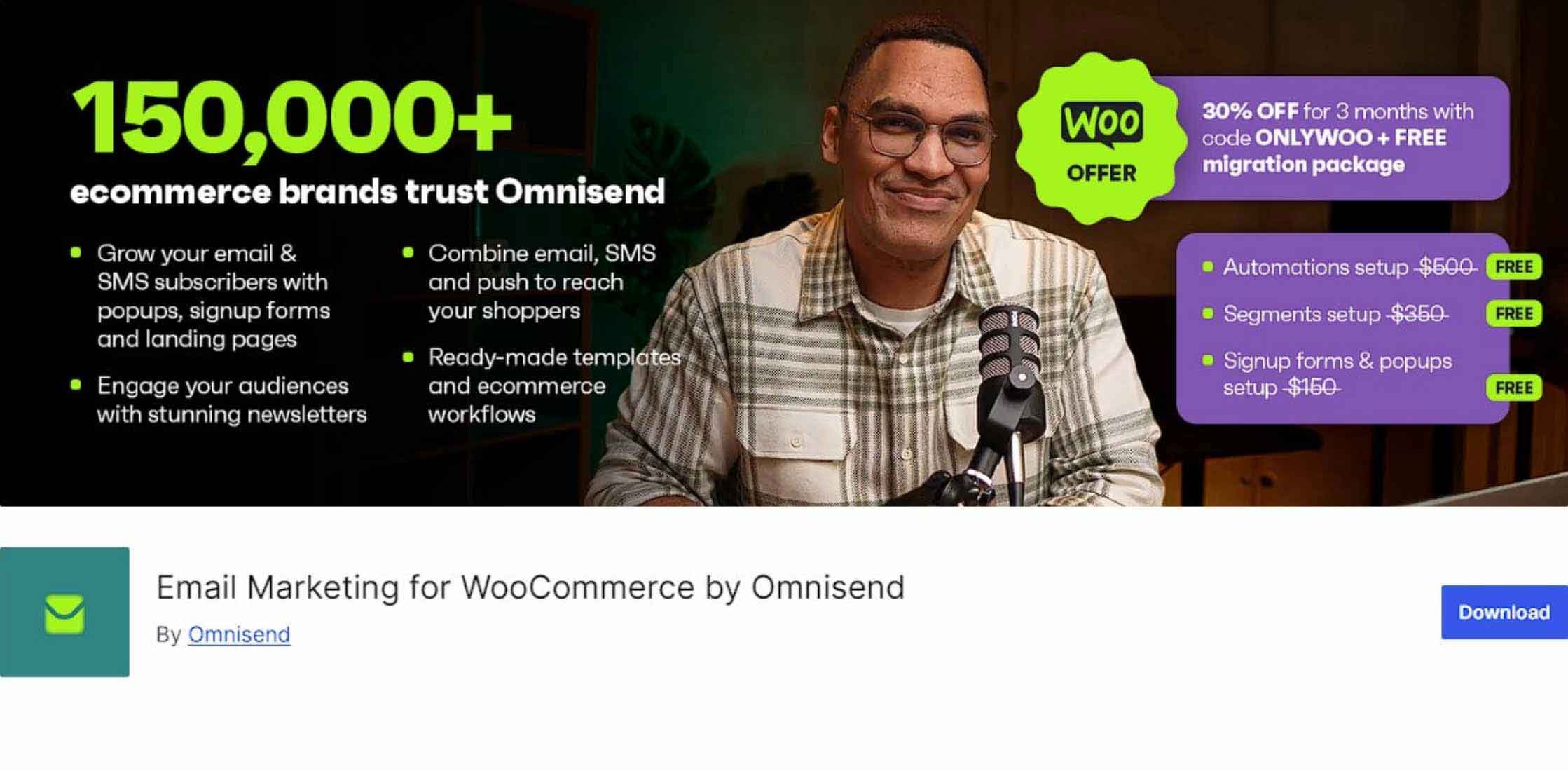
Omnisend is an ecommerce focused marketing platform designed specifically for online stores. It integrates with WooCommerce and supports email campaigns along with SMS and push notifications.
The platform includes ready to use automation workflows for ecommerce scenarios such as abandoned cart recovery, welcome sequences, and post purchase follow ups.
Key Features
- prebuilt ecommerce automation workflows
- multichannel marketing including SMS
- drag and drop email editor
- product recommendation emails
Pros
- strong ecommerce automation capabilities
- simple workflow setup
- helpful analytics tools
Cons
- pricing grows as subscriber lists increase
- advanced features require higher tier plans
Klaviyo
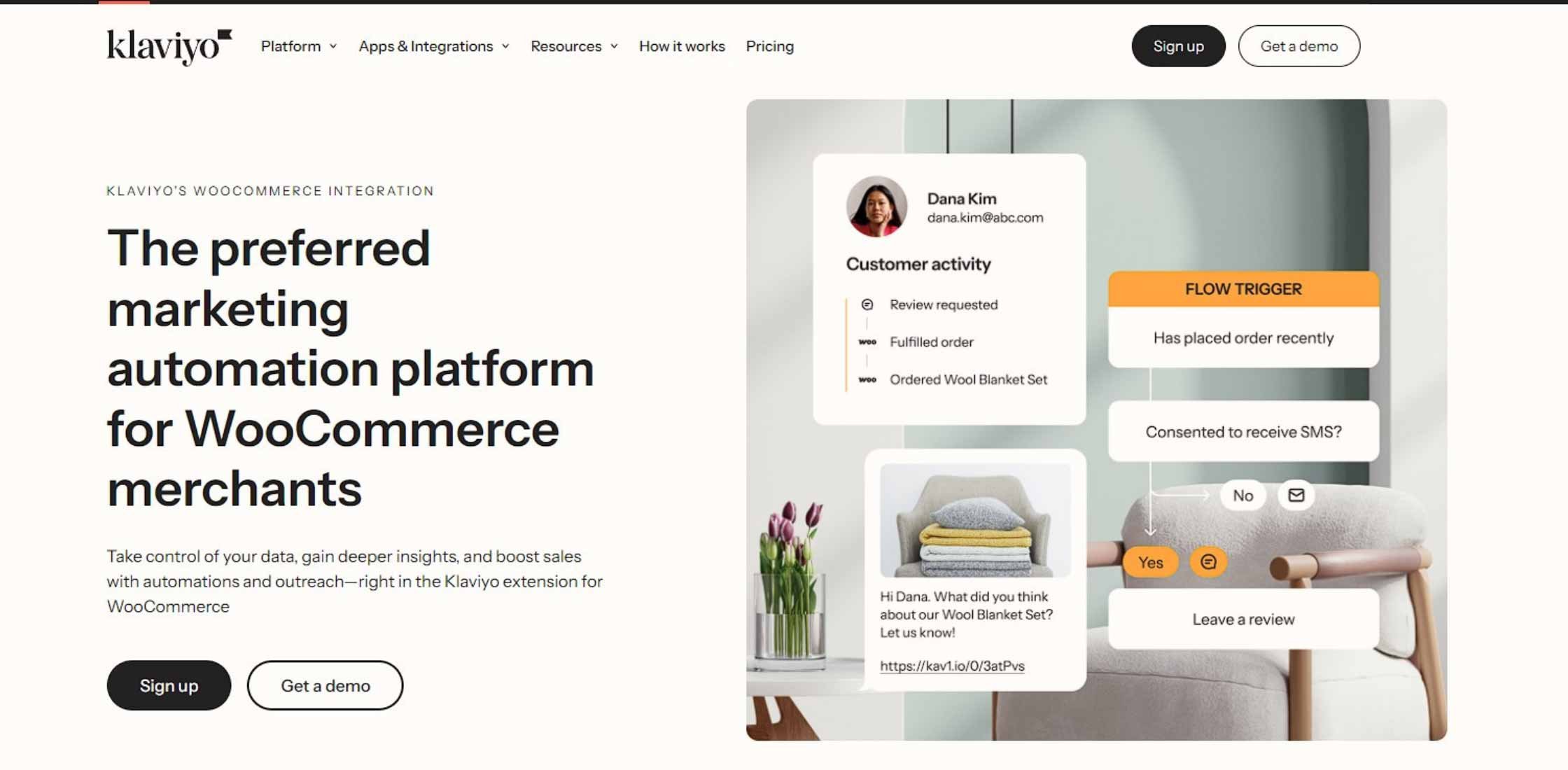
Klaviyo is a data driven marketing platform widely used by fast growing ecommerce brands. It focuses heavily on customer analytics and personalized campaigns.
The platform analyzes purchase behavior and customer engagement to generate targeted campaigns such as product recommendations and lifecycle automation.
Key Features
- predictive customer analytics
- advanced segmentation tools
- ecommerce automation workflows
- personalized product recommendations
Pros
- powerful analytics capabilities
- advanced segmentation features
- scalable for large ecommerce stores
Cons
- expensive for large subscriber lists
- more complex setup for beginners
Mailchimp

Mailchimp is one of the most recognized email marketing platforms. It offers tools for email campaigns, audience management, and marketing automation.
Although Mailchimp was originally designed for general marketing rather than ecommerce, many WooCommerce stores still use it because of its user-friendly interface and extensive integrations.
Key Features
- drag and drop email builder
- marketing automation workflows
- audience segmentation tools
- campaign reporting dashboard
Pros
- beginner friendly interface
- strong brand reputation
- wide integration ecosystem
Cons
- pricing increases with subscriber lists
- limited ecommerce automation features
MailPoet
MailPoet is a WordPress based email marketing plugin that allows businesses to manage campaigns directly from the WordPress dashboard.
This approach is attractive for WooCommerce users who prefer managing newsletters without leaving their website admin panel.
Key Features
- newsletter creation inside WordPress
- WooCommerce email customization
- subscriber management tools
- automation for basic campaigns
Pros
- seamless WordPress integration
- simple setup for small stores
- intuitive email editor
Cons
- fewer advanced automation features
- limited analytics capabilities
Brevo
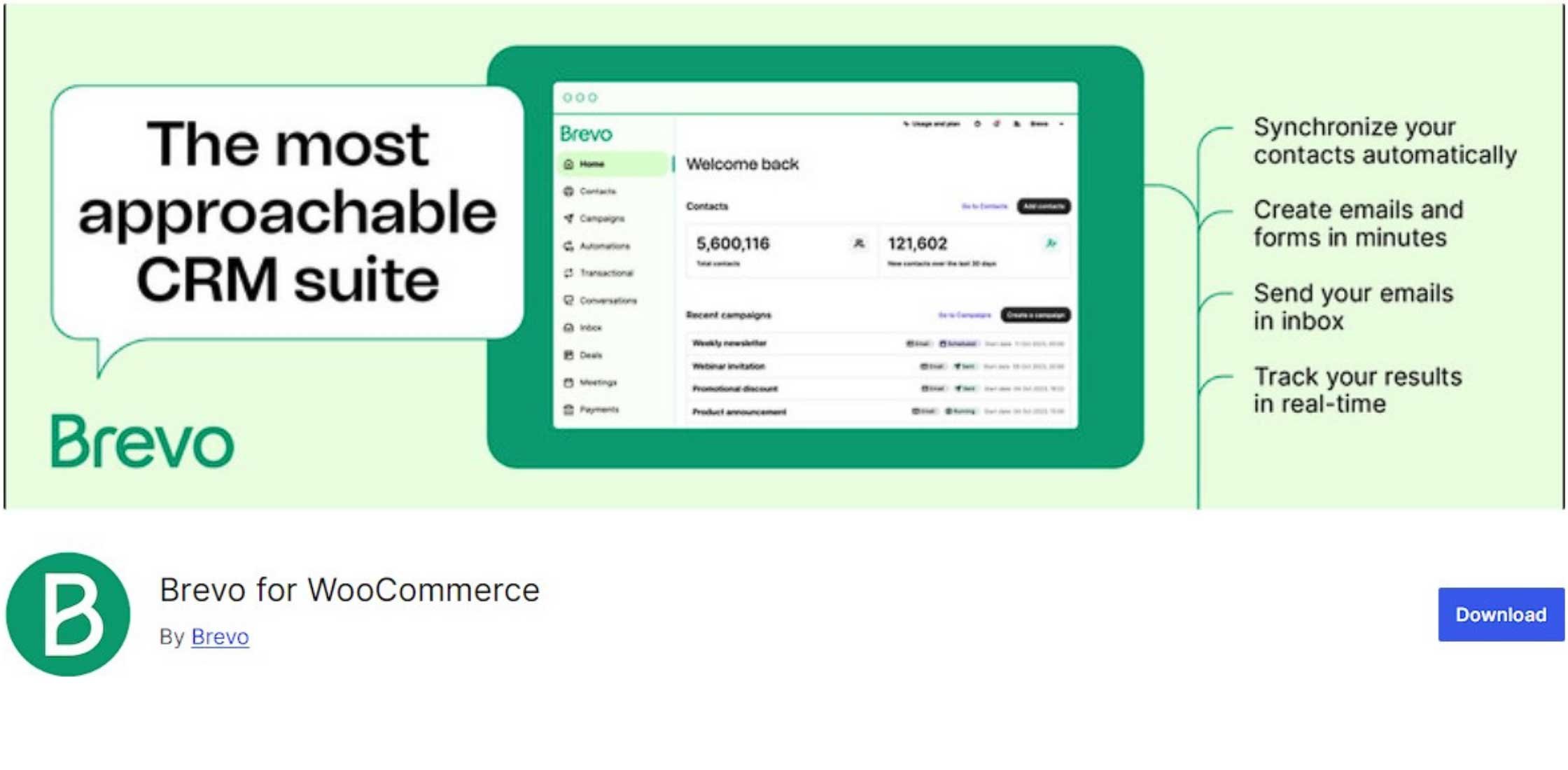
Brevo combines email marketing with SMS messaging and CRM functionality. It is commonly used by growing ecommerce businesses that want to manage multiple communication channels.
The platform offers automation workflows that trigger campaigns based on customer behavior.
Key Features
- email and SMS campaigns
- automation workflow builder
- customer relationship management tools
- campaign analytics
Pros
- multi channel marketing features
- flexible pricing structure
- scalable for growing stores
Cons
- interface may feel complex for beginners
- advanced features require higher plans
ActiveCampaign
ActiveCampaign is a marketing automation platform that combines email marketing with CRM functionality. It is widely used by businesses that want advanced automation workflows and customer lifecycle management.
The platform includes a visual automation builder that allows marketers to design detailed campaigns triggered by customer actions.
Key Features
- visual automation builder
- integrated CRM system
- advanced segmentation tools
- detailed campaign analytics
Pros
- powerful automation capabilities
- strong CRM integration
- detailed reporting tools
Cons
- steeper learning curve
- higher pricing compared to basic tools
Example WooCommerce Email Automation Workflows
Automation workflows allow ecommerce stores to communicate with customers at the right moment.
Abandoned Cart Reminder
When customers leave products in the cart without completing checkout, automated reminders encourage them to return and complete the purchase.
Post Purchase Follow Up
After a purchase, stores can send product tutorials, review requests, or related product recommendations.
Product Recommendation Campaign
Based on previous purchases, stores can recommend related products to increase average order value.
Win Back Campaign
Automated campaigns target customers who have not purchased for several months and encourage them to return.
Self Hosted vs SaaS Email Marketing Platforms
WooCommerce businesses can choose between SaaS platforms and WordPress native solutions.
SaaS Platforms
Examples include Mailchimp, Klaviyo, and Omnisend.
Advantages
- easier setup
- hosted infrastructure
- built in deliverability systems
Limitations
- pricing increases with subscriber lists
- customer data stored on external platforms
WordPress Native Platforms
These tools operate directly inside WordPress.
Advantages
- full control of customer data
- deeper WordPress integration
- flexible automation workflows
Many WooCommerce businesses consider this approach as their stores scale.
Alternatives to Popular Email Marketing Tools
Businesses often explore alternatives as their marketing needs evolve.
Alternatives to Mailchimp
Many ecommerce stores search for alternatives when subscriber based pricing becomes expensive.
Alternatives to Klaviyo
Some businesses prefer simpler tools with lower operational costs.
Alternatives to SaaS Platforms
WordPress based platforms allow businesses to maintain ownership of their customer database and infrastructure.
How to Choose the Right Email Marketing Tool
The best platform depends on your business stage and marketing goals.
Small Stores
Focus on simplicity, affordability, and basic automation.
Growing Stores
Look for advanced automation, segmentation, and campaign analytics.
Large Ecommerce Businesses
Prioritize scalability, detailed analytics, and reliable deliverability infrastructure.
Final Thoughts
Email marketing remains one of the most powerful marketing channels for ecommerce businesses. With the right automation workflows and segmentation strategies, WooCommerce stores can increase customer lifetime value and generate consistent revenue.
The best email marketing tools for WooCommerce in 2026 provide automation capabilities, strong analytics, and reliable integration with ecommerce platforms. Choosing the right platform depends on your store size, marketing strategy, and long term growth plans.
For businesses that want deeper control over customer data and marketing automation, WordPress native solutions are becoming increasingly popular. Platforms like NextCRM, a WordPress CRM for WooCommerce allow store owners to manage customer relationships, automation workflows, and campaign analytics directly inside their WordPress dashboard.
With the right platform and strategy, email marketing can become one of the most reliable growth channels for WooCommerce stores.
FAQs
What is the best email marketing plugin for WooCommerce?
Popular options include Omnisend, Klaviyo, MailPoet, and WordPress native platforms such as NextCRM. The best choice depends on your automation needs, budget, and store size.
Does WooCommerce support email marketing automation?
WooCommerce sends transactional emails by default, but advanced automation requires an email marketing plugin or platform that integrates with WooCommerce.
Can WooCommerce send promotional emails?
Yes. With an email marketing tool, WooCommerce stores can send newsletters, product promotions, abandoned cart reminders, and automated campaigns.
How do I automate abandoned cart emails in WooCommerce?
You can automate abandoned cart emails using an email marketing plugin that tracks cart activity and sends reminder emails when customers leave checkout without completing their purchase.
What is the difference between WooCommerce transactional and marketing emails?
Transactional emails are triggered by actions such as orders or shipping updates. Marketing emails are promotional campaigns designed to engage customers and increase sales.