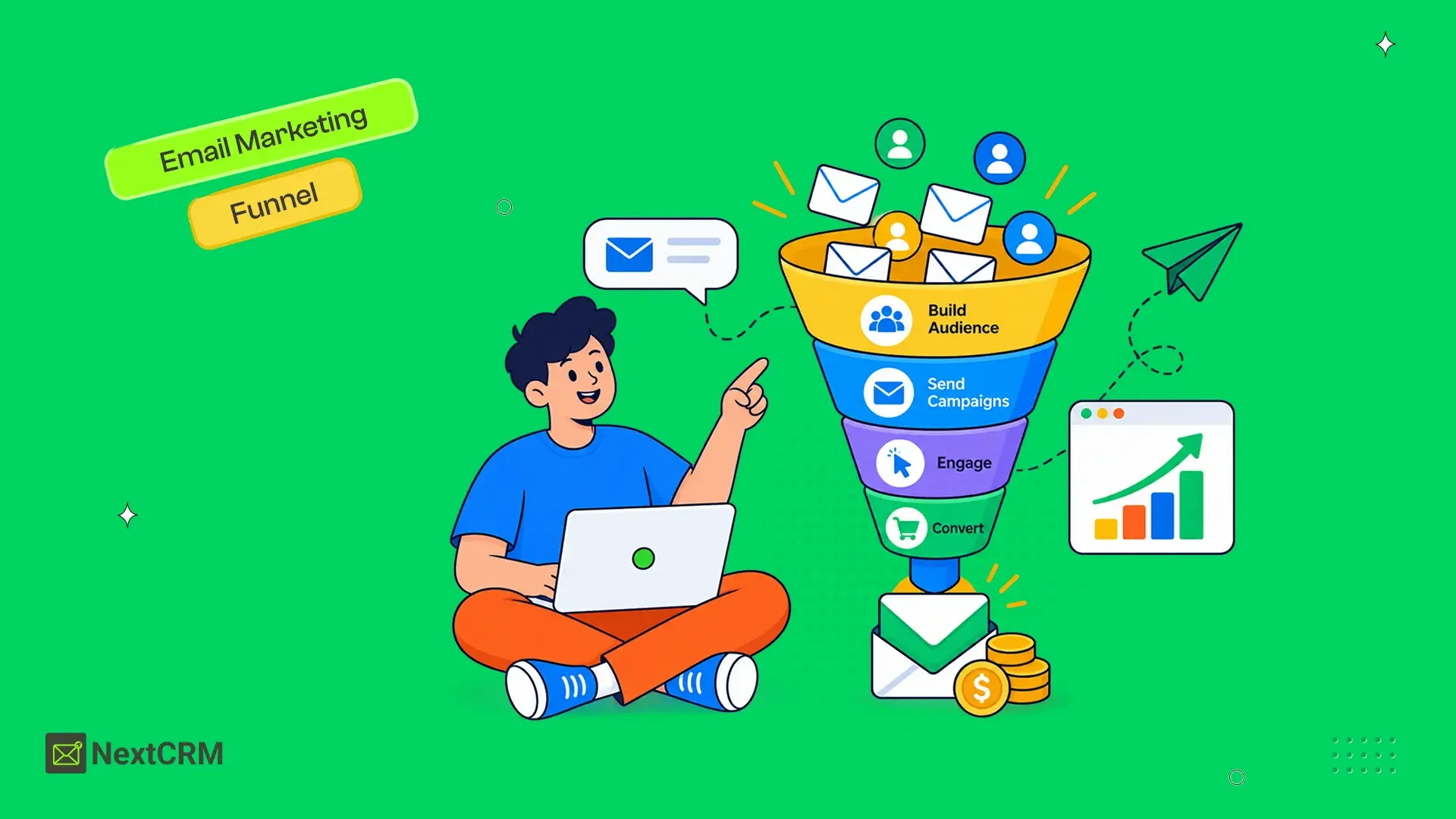
WordPress email marketing in 2026 is no longer limited to newsletters and scheduled campaigns. Modern businesses now use WordPress-native systems to manage automation, CRM workflows, WooCommerce intelligence, SMTP deliverability, visitor tracking, AI-assisted campaigns, and behavioral segmentation inside one connected customer infrastructure ecosystem powered by first-party data and operational ownership.
Most WordPress businesses do not struggle because they lack marketing tools.
They struggle because their marketing system slowly becomes fragmented.
A popup plugin handles lead capture. Another platform manages newsletters. SMTP comes from a separate plugin because emails stop reaching inboxes reliably. WooCommerce automation lives somewhere else. Analytics sit in another dashboard entirely.
Eventually, the marketing stack becomes harder to manage than the campaigns themselves.
That operational problem is one of the biggest reasons WordPress email marketing is changing so quickly in 2026.
Businesses no longer want isolated newsletter software. They want automation, CRM visibility, WooCommerce intelligence, visitor tracking, deliverability management, and AI-assisted workflows connected inside one environment instead of scattered across disconnected plugins and SaaS platforms.
Modern WordPress email marketing is no longer just about sending campaigns. It is about building a connected customer infrastructure system powered by first-party customer data and operational visibility.
What Is WordPress Email Marketing?
WordPress email marketing is the process of managing campaigns, customer communication, automation workflows, segmentation, and behavioral marketing directly through a WordPress-powered ecosystem.
A few years ago, most WordPress businesses treated email marketing as a separate layer. Forms collected subscribers, newsletters were scheduled manually, and automation depended heavily on external SaaS platforms.
That model is disappearing.
Modern WordPress email marketing increasingly works as a connected customer infrastructure system where WooCommerce behavior, CRM activity, visitor tracking, automation, analytics, and deliverability operate together instead of separately.
This shift is changing how businesses think about customer relationships.
A customer visiting multiple WooCommerce products can now trigger:
- personalized automation
- dynamic segmentation
- abandoned cart workflows
- loyalty campaigns
- post-purchase nurturing
without leaving the WordPress ecosystem.
This operational model creates what many businesses now describe as Unified Marketing Infrastructure.
Unified Marketing Infrastructure means customer data, communication, automation, deliverability, analytics, and behavioral tracking operate inside one connected ecosystem instead of being spread across disconnected tools.
The difference sounds technical at first, but operationally it changes almost everything.
Businesses gain:
- stronger customer journey visibility
- fewer disconnected workflows
- better first-party data control
- simpler operational management
- more reliable automation
- centralized reporting visibility
Why Email Marketing Still Delivers Strong ROI in 2026
Email marketing continues delivering strong ROI because businesses own the communication channel directly.
Organic social reach continues shrinking. Paid advertising costs continue rising. Search visibility changes constantly. Most digital channels now depend heavily on algorithms businesses do not control.
Email remains different.
A business with an engaged subscriber list still owns direct audience access. That changes the economics of marketing because communication no longer depends entirely on rented platforms.
According to Litmus Email Marketing ROI Research, email marketing consistently remains one of the highest-performing digital marketing channels because businesses maintain direct audience relationships and long-term communication control.
The bigger shift, however, is not newsletters.
It is automation.
Older email strategies mostly relied on scheduled promotions and broadcast campaigns. Modern systems behave differently because customer actions now drive communication automatically.
For example:
- abandoned carts trigger recovery workflows
- repeat purchases trigger loyalty automation
- inactive subscribers trigger re-engagement sequences
- pricing-page visits trigger sales-oriented follow-ups
This creates a much more responsive marketing system because communication adapts to customer behavior instead of treating every subscriber identically.
| Marketing Channel | Ownership Level | Audience Control | Long-Term Stability |
| Email Marketing | High | Direct | High |
| Organic Social | Low | Algorithm dependent | Low |
| Paid Advertising | None | Platform dependent | Medium |
| Search Traffic | Partial | Search-engine dependent | Medium |
How to Start WordPress Email Marketing
Starting WordPress email marketing becomes much easier when businesses think in terms of customer infrastructure instead of individual plugins.
Many businesses make the mistake of choosing tools one at a time without considering how those systems will eventually work together.
A better approach is building the foundation correctly from the beginning.
Choose the Right Infrastructure First
The first decision is whether to use:
- SaaS email platforms
- self-hosted WordPress-native systems
- hybrid infrastructure
This choice affects:
- customer data ownership
- automation flexibility
- operational complexity
- long-term costs
- reporting visibility
Businesses managing WooCommerce stores or long-term customer journeys usually benefit more from connected WordPress-native systems.
Configure SMTP and Deliverability Properly
Most WordPress businesses underestimate how important deliverability becomes as email volume grows.
Without proper SMTP infrastructure:
- emails land in spam folders
- automation reliability drops
- engagement declines
- sender reputation weakens
Reliable SMTP setup requires:
- SPF records
- DKIM authentication
- verified sending domains
- mailbox reputation management
This is one reason integrated SMTP infrastructure is becoming increasingly valuable operationally.
Build Lead Capture Workflows
Lead capture should connect directly with:
- segmentation
- automation
- CRM workflows
- behavioral tracking
Modern businesses now use:
- popups
- lead magnets
- embedded forms
- WooCommerce checkout opt-ins
- webinar registrations
- quiz funnels
The important part is not simply collecting emails.
It is understanding customer intent from the very beginning.
Create Behavioral Segmentation
Static email lists are becoming less effective.
Modern systems segment users using:
- purchase history
- browsing activity
- engagement behavior
- WooCommerce events
- customer lifetime value
This creates more relevant customer communication.
Launch Core Automation Workflows
Automation is now the operational core of modern email marketing.
Most businesses begin with:
- welcome sequences
- abandoned cart recovery
- post-purchase nurturing
- re-engagement campaigns
- loyalty workflows
As customer data grows, automation becomes increasingly personalized.
How Modern WordPress Email Marketing Systems Actually Work
Modern WordPress email marketing combines CRM systems, automation workflows, WooCommerce intelligence, visitor tracking, analytics, segmentation, and deliverability infrastructure into one connected customer ecosystem.
The biggest shift is not automation itself.
It is that automation now reacts to customer behavior instead of relying mainly on scheduled campaigns.
A few years ago, most systems focused heavily on newsletters, promotions, and manual segmentation. Modern websites now generate far richer behavioral signals, and automation systems can respond immediately.
For example:
- browsing activity
- product views
- abandoned carts
- email engagement
- course progress
- membership activity
- repeat purchases
can all trigger automation automatically.
Most businesses do not realize how much customer intent data they already collect through WooCommerce activity alone. Product views, repeat visits, category interest, purchase timing, and engagement behavior all reveal buying patterns that modern systems can use immediately.
That is one reason behavior-driven WordPress automation is evolving so quickly.
Why SMTP and Deliverability Infrastructure Matter So Much
Deliverability remains one of the most overlooked parts of WordPress email marketing.
Many businesses invest heavily in automation while treating email delivery as a secondary problem. Eventually, campaigns begin landing in spam folders, engagement drops, and troubleshooting becomes increasingly frustrating.
Reliable email delivery depends on:
- SMTP configuration
- SPF records
- DKIM authentication
- sender reputation
- bounce handling
- mailbox health
One of the strangest parts of the WordPress ecosystem is how normal it became to run email marketing from one system while deliverability depends entirely on another plugin.
That workflow creates operational fragmentation almost immediately.
This is one area where NextCRM introduced a genuinely differentiated operational approach.
Instead of treating deliverability as a separate infrastructure layer, NextCRM combines:
- email marketing
- automation
- CRM workflows
- built-in mailbox management
- SMTP configuration
- WooCommerce automation
- visitor tracking
- AI-assisted workflows
inside one WordPress-native ecosystem.
Instead of configuring a separate SMTP plugin just to make automation function reliably, mailbox infrastructure operates directly inside the customer journey system itself.
Operationally, this reduces:
- plugin fragmentation
- workflow duplication
- maintenance overhead
- disconnected reporting
- infrastructure complexity
That is becoming one of the strongest differentiators between unified WordPress-native systems and fragmented SaaS-style workflows.
WordPress Email Deliverability Checklist
Strong deliverability starts with infrastructure quality long before campaigns are launched.
Most WordPress email problems happen because businesses configure automation first and deliverability second.
| Deliverability Task | Why It Matters |
| Configure SMTP | Improves inbox delivery reliability |
| Add SPF Records | Verifies sending servers |
| Enable DKIM Authentication | Helps providers trust outgoing mail |
| Verify Sending Domain | Reduces spam classification risk |
| Monitor Bounce Rates | Protects sender reputation |
| Warm Up New Domains | Prevents sudden sending spikes |
| Track Sender Reputation | Maintains inbox placement quality |
| Avoid Low-Quality Shared SMTP | Improves delivery stability |
| Monitor Spam Complaints | Protects long-term deliverability |
Businesses often realize how fragile their email setup is only after deliverability problems begin affecting revenue directly.
That is why infrastructure quality matters just as much as automation quality.
Why Marketing Fragmentation Becomes Dangerous at Scale
Marketing fragmentation becomes much more dangerous as customer data, automation complexity, and campaign volume grow.
Many businesses do not notice the problem early because disconnected systems still appear functional at smaller scale.
The operational issues usually appear later.
Customer data becomes inconsistent across platforms. Automation workflows stop syncing properly. Reporting becomes fragmented. Deliverability troubleshooting becomes difficult because different parts of the infrastructure live in different systems.
Eventually, businesses lose visibility into the customer journey itself.
This is one reason many growing WooCommerce businesses now prioritize Unified Marketing Infrastructure instead of continuously adding disconnected plugins.
The issue is not simply convenience.
It is operational reliability.
| Fragmented SaaS Workflow | Unified WordPress-Native Workflow |
| Separate SMTP plugin | Integrated mailbox infrastructure |
| External CRM | Native customer management |
| Disconnected analytics | Unified reporting visibility |
| Multiple subscriptions | Centralized infrastructure |
| Isolated customer data | Shared behavioral intelligence |
Example of a Modern WooCommerce Email Workflow
A modern WooCommerce email workflow usually operates as a connected customer journey instead of isolated campaigns.
For example:
- A visitor lands on a WooCommerce product page
- A popup offers a discount or lead magnet
- The visitor joins an email list
- The CRM system segments the user automatically
- Product browsing triggers behavioral tagging
- Abandoned cart automation activates if checkout is incomplete
- Post-purchase workflows trigger after conversion
- Loyalty automation re-engages repeat customers later
That entire workflow can now happen directly inside WordPress using unified customer infrastructure systems.
This is why WordPress-native marketing ecosystems are becoming much more powerful than traditional newsletter-focused setups.
Common WordPress Email Marketing Mistakes
Most WordPress email marketing problems are operational rather than technical.
Businesses often focus heavily on campaigns while ignoring infrastructure quality.
Using Too Many Disconnected Plugins
This creates:
- fragmented customer data
- inconsistent automation
- reporting conflicts
- maintenance overhead
Ignoring Deliverability Early
Many businesses only focus on SMTP after campaigns begin failing.
Deliverability should be configured correctly from the beginning.
Treating All Subscribers the Same
Modern marketing depends heavily on behavioral segmentation.
Broadcasting identical campaigns to every subscriber usually reduces engagement over time.
Focusing Only on Open Rates
Open rates alone no longer provide enough visibility into customer intent or funnel performance.
Customer journey visibility matters much more now.
Building Automation Without Strategy
Automation should support:
- customer journeys
- lifecycle stages
- retention
- loyalty
- behavioral personalization
instead of simply sending more emails.
WordPress Email Marketing Best Practices for 2026
The strongest WordPress marketing systems in 2026 focus heavily on operational simplicity, first-party data ownership, and customer journey visibility.
Prioritize First-Party Customer Data
Businesses increasingly rely on owned behavioral intelligence instead of external platform dependency.
Reduce Plugin Fragmentation
Disconnected marketing systems become increasingly difficult to manage as businesses scale.
Configure Deliverability Early
SMTP infrastructure should never be treated as an afterthought.
Focus on Behavioral Segmentation
Customer behavior now drives the strongest automation systems.
Monitor Customer Journeys Instead of Isolated Metrics
Open rates matter less than:
- retention
- conversion behavior
- funnel movement
- lifecycle progression
Build Long-Term Infrastructure Instead of Temporary Campaign Systems
The strongest WordPress businesses increasingly think in terms of customer infrastructure instead of isolated email tools.
Best WordPress Email Marketing Tools Compared
The best WordPress email marketing platform depends heavily on infrastructure goals, workflow complexity, and operational priorities.
| Platform | WordPress Native | Built-In SMTP | CRM | AI Assistance | WooCommerce | Self-Hosted |
| NextCRM | Yes | Yes | Yes | Yes | Yes | Yes |
| MailPoet | Yes | Partial | Limited | No | Yes | Partial |
| Brevo | No | No | Yes | Yes | Yes | No |
| Mailchimp | No | No | Moderate | Limited | Yes | No |
| Klaviyo | No | No | Advanced | Yes | Advanced | No |
NextCRM positions itself around unified WordPress-native customer infrastructure. Its strongest differentiation is operational consolidation. Instead of requiring separate plugins for SMTP, automation, CRM workflows, visitor tracking, and customer analytics, it combines these systems directly inside one environment.
MailPoet focuses heavily on newsletters and WordPress-native delivery.
Brevo provides multichannel marketing through a SaaS ecosystem.
Mailchimp remains one of the most recognized email marketing platforms globally.
Klaviyo focuses heavily on ecommerce automation and customer data workflows.
Continue Building Your WordPress Marketing Infrastructure
WordPress email marketing works best when the surrounding infrastructure is equally optimized.
Businesses building long-term customer ecosystems should also invest in:
- SMTP optimization and deliverability
- WooCommerce automation workflows
- popup and lead capture optimization
- customer journey tracking
- visitor intelligence
- AI-assisted campaign generation
- behavioral segmentation systems
The strongest WordPress marketing systems are no longer isolated campaign tools.
They are connected customer infrastructure ecosystems.
The Future of WordPress Email Marketing
The future of WordPress email marketing is shifting toward AI-native customer infrastructure powered by first-party behavioral intelligence.
The biggest long-term shift is not simply automation.
It is infrastructure consolidation.
Businesses increasingly want:
- centralized customer intelligence
- unified reporting
- cross-channel orchestration
- behavior-driven automation
- first-party data ownership
- operational flexibility
inside one ecosystem.
AI will continue accelerating:
- campaign creation
- segmentation
- personalization
- automation optimization
However, ownership and infrastructure control are becoming equally important strategic priorities.
Most growing WordPress businesses eventually discover the same thing. The real challenge is not sending more emails. The real challenge is building customer infrastructure that remains scalable, visible, and operationally manageable as the business grows.
This is one reason WordPress-native marketing ecosystems continue growing rapidly in 2026.
The future likely belongs to platforms that combine:
- CRM
- automation
- analytics
- visitor intelligence
- deliverability infrastructure
- WooCommerce behavior
- AI workflows
Inside unified customer infrastructure systems.
Final Thoughts
WordPress email marketing is no longer evolving around newsletters alone.
The entire ecosystem is shifting toward connected customer infrastructure, where automation, CRM visibility, WooCommerce intelligence, deliverability, analytics, and behavioral tracking operate together instead of separately.
That operational shift matters because fragmented marketing stacks become increasingly difficult to manage as businesses grow.
Most businesses eventually discover the same problem. The issue is rarely a lack of tools. The issue is that too many disconnected systems create operational friction, inconsistent reporting, fragmented customer data, and unreliable automation workflows.
This is why Unified Marketing Infrastructure is becoming one of the defining trends shaping WordPress marketing systems in 2026.
Businesses increasingly want:
- owned customer data
- centralized reporting
- integrated deliverability
- behavioral automation
- AI-assisted workflows
- operational simplicity
inside one connected ecosystem.
The future of WordPress email marketing will likely belong to platforms that combine customer intelligence, automation, deliverability, analytics, and behavioral visibility inside infrastructure that the business actually controls.
That is a very different model from the fragmented plugin stacks and disconnected SaaS workflows that dominated the previous generation of email marketing.
And that shift is already happening.
Frequently Asked Questions
What is the best WordPress email marketing plugin?
The best WordPress email marketing plugin depends on infrastructure goals and workflow complexity. Businesses needing unified automation, CRM visibility, SMTP management, WooCommerce intelligence, and visitor tracking increasingly prefer WordPress-native ecosystems instead of fragmented standalone plugins.
Do I need SMTP for WordPress email marketing?
Yes. SMTP significantly improves email deliverability because it authenticates outgoing emails properly. Without SMTP configuration, WordPress emails are much more likely to land in spam folders or fail entirely.
Is self-hosted email marketing better than SaaS platforms?
Self-hosted systems provide greater control over customer data, automation infrastructure, operational flexibility, and long-term scalability. SaaS platforms often simplify onboarding but can create stronger platform dependency over time.
Can WordPress handle marketing automation?
Yes. Modern WordPress-native systems now support advanced automation, including behavioral segmentation, abandoned cart recovery, CRM workflows, customer journey tracking, and AI-assisted campaign management.
Why is WooCommerce email automation important?
WooCommerce automation allows businesses to react to customer behavior automatically. Product views, abandoned carts, repeat purchases, and engagement activity can all trigger personalized communication workflows.
Why do WordPress marketing systems become fragmented?
Most WordPress businesses gradually add tools over time without planning long-term infrastructure architecture. Eventually, automation, CRM systems, analytics, SMTP infrastructure, and customer data become disconnected across multiple platforms.
What is Unified Marketing Infrastructure?
Unified Marketing Infrastructure refers to managing automation, customer data, analytics, deliverability, CRM workflows, and behavioral tracking inside one connected ecosystem instead of multiple disconnected tools.