TL;DR
Email marketing is still one of the most valuable digital marketing channels in 2026 because it gives businesses direct access to an owned audience, measurable ROI, personalized communication, automation, and stronger customer retention. For WordPress users, these benefits become stronger when contacts, campaigns, segmentation, automation, and reporting stay connected inside one native workflow.
Email marketing has survived every “email is dead” prediction because it solves a simple business problem.
Businesses need a reliable way to reach people who already showed interest.
Social media can help people discover a brand. Paid ads can bring new visitors. Search can create long-term visibility. But email gives businesses something different. It gives them a direct line to people who have already subscribed, purchased, downloaded, booked, or asked to stay updated.
That is why email is still used for newsletters, product launches, abandoned cart reminders, lead nurturing, customer education, renewal reminders, review requests, and win-back campaigns.
The real benefit of email marketing is not just sending messages. It is building a repeatable communication system that turns attention into trust, trust into action, and action into revenue.
For WordPress businesses, this benefit becomes even more practical when email marketing stays close to the website. A WordPress-native system like NextCRM can help manage contacts, lists, tags, campaigns, automation, and reporting inside WordPress without turning the website into a scattered stack of disconnected tools.
This guide is especially useful for small business owners, WooCommerce stores, WordPress site owners, service businesses, course creators, and marketers who want to understand why email marketing still matters in 2026.
Is Email Marketing Still Effective in 2026?
Email marketing is still effective in 2026 because it remains one of the few digital channels where businesses can build, own, and activate a direct audience.
Most digital marketing channels have become harder to control.
Organic social reach depends on platform algorithms. Paid ads depend on auction costs, creative performance, tracking limits, and budget. Search traffic depends on ranking changes, AI summaries, and search engine updates.
Email is different because your list is an owned audience.
That does not mean email is easy. Inbox competition is real. Spam filters are stricter. People unsubscribe when messages feel irrelevant. But the channel itself remains powerful because it is permission-based, measurable, and directly tied to customer relationships.
Forbes Advisor reports that there were 4.48 billion email users worldwide and projects that number to reach 4.73 billion by 2026. That scale shows why email remains one of the most widely used digital communication channels for businesses.
The strongest 2026 shift is not simply that businesses send more emails. The shift is that businesses need smarter email systems.
AI can help draft subject lines and campaign ideas. But email results still depend on consent, list quality, segmentation, timing, deliverability, and useful content.
That is where email marketing becomes less about blasting a list and more about building a first-party customer communication system.
What Are the Biggest Benefits of Email Marketing?
The biggest benefits of email marketing are high ROI, audience ownership, personalization, automation, measurable performance, better retention, and direct customer communication.
Many articles list 10, 16, or 25 benefits of email marketing. That can be helpful, but it often turns into a generic list.
A better way to understand email marketing is to group the benefits by business outcome.
Email helps businesses grow in four practical ways.
It helps generate revenue from people who already know the brand.
It helps build relationships without depending fully on third-party platforms.
It helps personalize communication based on user behavior.
It helps measure what works and improve future campaigns.
| Benefit | What it means | Business impact |
| High ROI | Email can produce strong returns compared with many channels | Better use of marketing budget |
| Audience ownership | You control your contact list more than your social reach | Less dependence on algorithms |
| Personalization | You can send different messages to different groups | Better engagement and conversions |
| Automation | Emails can trigger based on actions or timing | Less manual follow-up work |
| Measurable results | Opens, clicks, conversions, bounces, and unsubscribes can be tracked | Faster campaign improvement |
| Customer retention | You can stay in touch after the first purchase | More repeat sales and loyalty |
| Website traffic | Email can send readers back to useful pages, offers, or resources | More qualified visits |
| First-party data | Subscriber behavior can improve future campaigns | Better customer understanding |
These benefits work best when they connect.
ROI improves when emails are personalized. Personalization improves when segmentation is accurate. Segmentation improves when customer data is clean. Automation works better when triggers match real customer behavior.
This is why email marketing should not be treated as a simple newsletter task. It should be treated as a customer communication system.
Email Marketing Delivers Strong ROI
Email marketing delivers strong ROI because it reaches people who have already given permission to hear from a business.
A cold ad interrupts someone who may not know the brand. A marketing email reaches someone who subscribed, purchased, joined a waitlist, requested a resource, or asked for updates.
That difference matters because the audience is warmer from the start.
Litmus reports that email drives an average ROI of 36 dollars for every dollar spent. Its 2025 ROI report also shows that 35 percent of marketing leaders receive 10 dollars to 36 dollars back for every dollar spent on email, while 30 percent receive 36 dollars to 50 dollars.
Still, ROI is not automatic.
Email returns depend on list quality, subscriber intent, offer relevance, sending frequency, deliverability, landing pages, testing, and how well campaigns are measured.
A small list with strong buyer intent can outperform a large list with weak engagement.
For example, a WooCommerce store with 2,000 real customers may earn more from email than a generic list of 50,000 unqualified contacts. Past buyers already know the brand, trust the store, and are more likely to respond to a relevant offer.
That is why email ROI should be measured by workflow, not only by channel.
A welcome series, abandoned cart email, newsletter, post-purchase sequence, and win-back campaign all have different goals. They also create different types of return.
A good ROI mindset separates email by campaign type.
| Email activity | Main cost | Main return |
| Newsletter | Content planning and sending | Website visits and brand recall |
| Welcome series | Setup and writing | First purchase or lead conversion |
| Abandoned cart email | Automation setup | Recovered checkout revenue |
| Post-purchase email | Workflow setup | Repeat purchase and fewer support questions |
| Win-back campaign | Segmentation and testing | Reactivated customers |
The most useful question is not “What is the ROI of email marketing?”
The better question is “Which email workflows create the most return for this specific business?”
Email Marketing Builds an Owned Audience
Email marketing builds an owned audience because subscribers are part of your contact list, not only part of a platform feed.
A social follower is valuable, but platform reach can change without warning. An algorithm update can reduce visibility. A paid campaign can stop when the budget ends. A social account issue can disrupt communication.
An email list is more portable and controllable.
You can export contacts, clean the list, segment customers, move providers, and keep a direct relationship with subscribers over time.
This is one reason email marketing fits the 2026 shift toward first-party data. Businesses are trying to rely less on third-party tracking and more on data collected directly from their own website, forms, purchases, and customer interactions.
For WordPress users, ownership has another layer.
When contact forms, WooCommerce orders, user behavior, tags, lists, campaigns, and reports stay connected, marketing becomes easier to understand.
This is the NextCRM Ownership Loop.
| Step | What happens | Why it matters |
| Capture | A visitor subscribes, submits a form, or becomes a customer | The relationship starts with consent |
| Understand | Source, status, tags, location, and behavior are recorded | The business learns what the contact cares about |
| Segment | Contacts are grouped by interest, behavior, or lifecycle stage | Messages become more relevant |
| Communicate | Campaigns and automations send useful emails | The relationship stays active |
| Measure | Opens, clicks, unsubscribes, bounces, and purchases are tracked | Future campaigns improve |
The NextCRM Ownership Loop is useful because it explains email marketing as a system, not as isolated campaigns.
For WordPress businesses, this loop can reduce tool fragmentation. Contacts, segments, campaigns, and reports can stay closer to the website where the relationship begins.
Email Marketing Improves Personalization
Email marketing improves personalization because contacts can be grouped by interest, behavior, purchase history, location, engagement, and lifecycle stage.
Personalization is not only adding a first name to a subject line.
That is the most basic version.
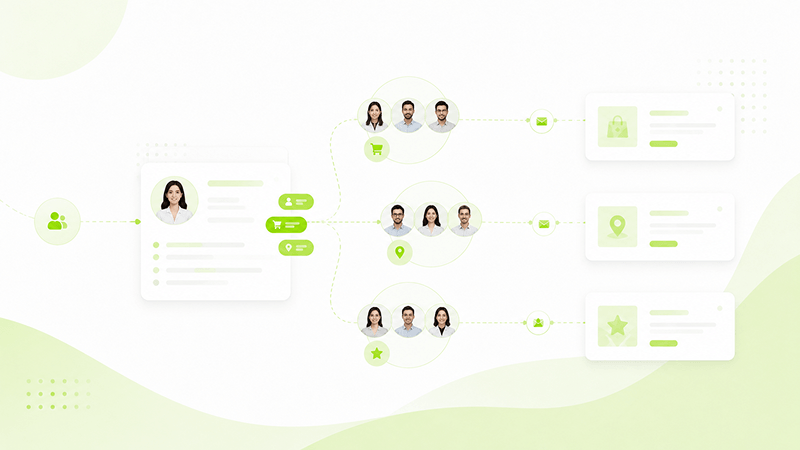
Real personalization happens when a business sends the right message based on what the subscriber needs next.
A new subscriber may need an introduction. A first-time buyer may need product education. A repeat customer may need loyalty content. An inactive contact may need a re-engagement email. A cart abandoner may need a reminder, a trust signal, or a clearer reason to complete checkout.
This is why segmentation is one of the most important benefits of email marketing.
| Segment | Example trigger | Useful email type |
| New subscriber | Joined a newsletter | Welcome series |
| First-time buyer | Completed first order | Product education |
| Repeat buyer | Bought more than once | Loyalty update |
| Cart abandoner | Added product but did not buy | Cart recovery reminder |
| Inactive contact | No engagement for a set period | Re-engagement campaign |
| High-intent lead | Visited pricing or product page | Educational follow-up |
| Local customer | City or region known | Location-specific offer |
For WordPress and WooCommerce businesses, personalization becomes more useful when website behavior informs email campaigns.
A customer’s purchase history, list membership, tags, campaign engagement, and website activity can all guide the next message.
NextCRM can support this workflow through contact lists, tags, contact types, statuses, segmentation filters, campaign tracking, and automation logic. A WordPress business can use those features to send more relevant emails without moving every customer interaction into a separate SaaS platform.
Email Automation Saves Time and Captures More Opportunities
Email automation saves time because important messages can be triggered by customer actions instead of being sent manually.
Manual follow-up breaks down as a business grows.
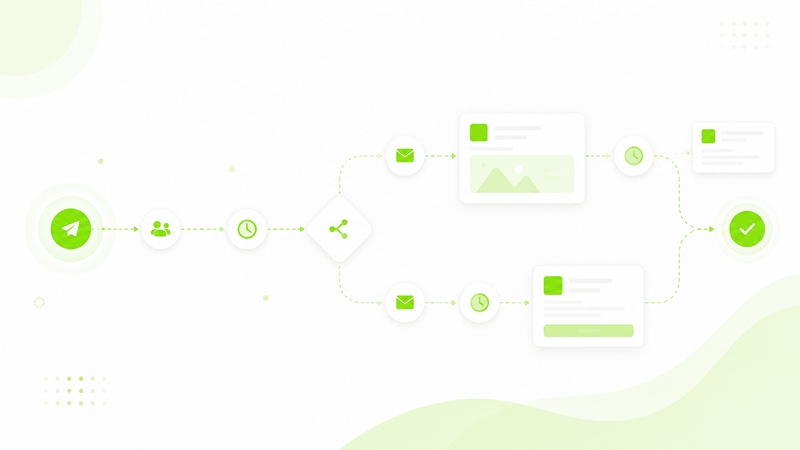
A small store may remember to message a few customers. A growing business cannot manually follow up with every new subscriber, lead, buyer, abandoned cart, inactive contact, and renewal opportunity.
Automation solves this by creating repeatable workflows.
The best automation does not feel robotic. It feels timely.
| Workflow | Trigger | Purpose |
| Welcome series | New subscriber joins | Introduce the brand and build trust |
| Lead nurture | User downloads a resource | Educate before a sales decision |
| Abandoned cart | Cart left incomplete | Recover potential revenue |
| Post-purchase follow-up | Customer completes an order | Educate and reduce support questions |
| Review request | Order or service completed | Collect feedback and social proof |
| Win-back email | No activity for a period | Re-engage inactive contacts |
| Renewal reminder | Subscription or service due | Prevent churn |
Automation is valuable because it catches moments that manual marketing often misses.
A customer who abandons a cart may still be interested. A new subscriber may forget why they signed up. A buyer may need help after the purchase. An inactive subscriber may still care, but not about the emails they are currently receiving.
A WordPress website can benefit from automation when workflows are tied to real website activity.
A WooCommerce buyer can enter a post-purchase sequence. A form submitter can enter a nurture campaign. A tagged contact can enter a specific workflow. A customer who clicks a link can receive a more relevant follow-up later.
This is where NextCRM fits naturally. It helps WordPress users create campaigns, segment contacts, and build automations using triggers, delays, and conditions inside the WordPress environment.
Email Marketing Is Easy to Measure
Email marketing is easy to measure because every campaign creates performance signals that can guide better decisions.
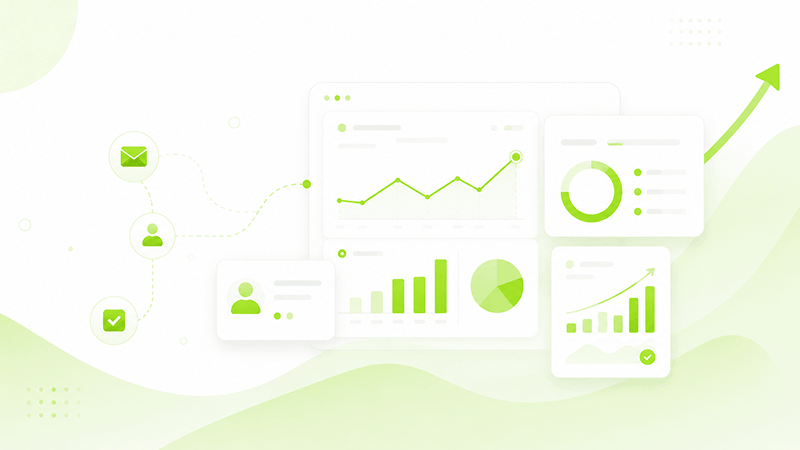
The basic metrics include open rate, click rate, bounce rate, unsubscribe rate, conversion rate, revenue per email, and list growth.
But marketers should be careful with open rate in 2026.
Privacy features and automatic image loading can make open tracking less reliable than it used to be. Open rate is still useful as a direction signal, but click rate, conversion rate, revenue per email, unsubscribe rate, and reply quality usually tell a clearer story.
| Metric | What it tells you | What to improve |
| Open rate | Whether sender name and subject line attract attention | Subject line, sender identity, timing |
| Click rate | Whether content and CTA are relevant | Offer, layout, CTA, message clarity |
| Conversion rate | Whether the landing page and offer work | Landing page, pricing, trust, checkout |
| Bounce rate | Whether list quality is healthy | Email validation and list cleanup |
| Unsubscribe rate | Whether frequency or relevance is off | Segmentation, cadence, expectations |
| Revenue per email | How much value each email creates | Offer quality and automation timing |
| Reply rate | Whether subscribers feel connected | Human tone and useful content |
Many businesses focus only on opens because they are easy to see. That can lead to weak decisions.
A campaign with a lower open rate but higher purchase rate may be more valuable than a campaign with a high open rate and no sales.
NextCRM’s reporting and engagement data can support this kind of practical measurement inside WordPress. Instead of checking campaign performance in one tool, website behavior in another, and customer data in another, WordPress users can keep more of that insight connected.
This brings the NextCRM Ownership Loop back into the workflow.
Capture the contact. Understand the behavior. Segment the audience. Communicate with relevance. Measure what happens next.
Email Marketing Strengthens Customer Retention
Email marketing strengthens customer retention because it creates repeated, useful communication after the first interaction.
Many businesses spend heavily to get a lead or first purchase, then stop communicating after the transaction.
Email helps close that gap.
A customer relationship does not end after the sale. Customers may need onboarding, product education, care instructions, service reminders, renewal notices, support content, and loyalty benefits.
Email gives businesses a respectful way to stay present without depending on ads.
| Email type | Retention goal |
| Welcome email | Make a strong first impression |
| Educational email | Help the customer use the product or service |
| Newsletter | Stay top of mind with useful updates |
| Post-purchase email | Reduce confusion and build confidence |
| Review request | Invite feedback and social proof |
| Birthday or milestone email | Add a personal touch |
| Re-engagement email | Bring back inactive contacts |
The best retention emails do not always sell.
Some educate. Some reassure. Some remind. Some ask for feedback. Some help the customer get more value from something they already bought.
That balance matters because subscribers can feel the difference between a brand that only sends discounts and a brand that understands their needs.
Email Marketing Drives Qualified Website Traffic
Email marketing drives qualified website traffic because subscribers already know the brand and are more likely to engage with the content.
Not all website traffic is equal.
A random visitor from a broad ad may leave quickly. A subscriber who clicks from an email already has context. They know who sent the message. They understand why they are clicking. That makes email traffic more qualified.
Email can send subscribers to many useful website destinations.
| Email goal | Website destination |
| Educate readers | Blog post or guide |
| Sell a product | Product page or landing page |
| Book an appointment | Booking page |
| Recover carts | Cart or checkout page |
| Promote updates | Changelog or announcement page |
| Build trust | Case study or testimonial page |
| Support customers | Documentation or help page |
For WordPress businesses, this creates a strong marketing loop.
The website captures subscribers. Email sends them back to useful pages. Website behavior informs future segments. Campaign reports show what content performs.
This loop is useful for WooCommerce stores, service businesses, course creators, agencies, and local businesses that rely on repeat visits.
It also supports internal content growth. A business can use email to send readers to helpful blog posts, comparison guides, product updates, or educational resources.
Email Marketing Supports Small Businesses, Ecommerce, and WordPress Sites
Email marketing supports small businesses, ecommerce stores, and WordPress websites because each group needs affordable, direct, and measurable customer communication.
A small business usually needs a low-cost way to stay visible without paying for every interaction.
An ecommerce store needs repeat purchases, abandoned cart recovery, product recommendations, and customer education.
A WordPress website needs a way to connect forms, users, content, orders, campaigns, and customer data without creating a messy plugin stack.
Here is how the benefits change by business type.
| Business type | Main email marketing benefit | Example campaign |
| Small business | Affordable customer communication | Monthly newsletter or local offer |
| WooCommerce store | Repeat sales and cart recovery | Abandoned cart and post-purchase flow |
| Service business | Appointment reminders and retention | Follow-up email after booking |
| Course creator | Lead nurturing and student engagement | Welcome series and lesson reminders |
| Agency | Client education and lead follow-up | Proposal follow-up and onboarding emails |
| WordPress business | Connected first-party data | Forms, tags, campaigns, and reports in one workflow |
This section is important because the benefits of email marketing are not abstract. They change based on how the business makes money.
For WordPress users, the benefit is especially clear.
A connected system reduces manual exports, duplicate contact records, scattered reports, and unnecessary tool switching. That is why a WordPress-native platform like NextCRM can be useful for businesses that want contact management, segmentation, campaigns, automation, and reporting closer to their website.
Email Marketing Works Best With Other Channels
Email marketing works best when it supports the full customer journey instead of replacing every other marketing channel.
Email, social media, SMS, paid ads, and push notifications all have different jobs.
Email is strong when a person has already given permission. Social media is strong for discovery. Paid ads are strong for fast reach. SMS is strong for urgent reminders. Push notifications are useful for quick re-engagement.
| Channel | Best use | Main strength | Main weakness |
| Nurture, retention, offers, education | Owned audience and measurable performance | Inbox competition and deliverability risk | |
| Social media | Discovery and community | Reach and brand personality | Algorithm dependence |
| Paid ads | Fast acquisition | Scalable traffic | Cost stops when budget stops |
| SMS | Urgent reminders | High immediacy | Can feel intrusive |
| Push notifications | Quick re-engagement | Fast prompts | Requires permission and can be ignored |
Email is often not the first touchpoint.
A customer may discover a brand through search, social, video, referral, or ads. But email often becomes the channel that turns curiosity into trust.
A cleaning business may attract visitors through local SEO. A salon may attract attention through Instagram. A WooCommerce store may bring visitors through ads. Email helps each of them continue the conversation after the first visit.
Common Email Marketing Mistakes That Reduce Results
Email marketing fails when businesses send too often, ignore consent, use weak segmentation, or measure the wrong outcomes.
The channel is strong, but bad execution can damage performance and trust.
| Mistake | Why it hurts | Better approach |
| Buying email lists | Low trust and high spam risk | Build opt-in lists |
| Sending the same email to everyone | Low relevance | Segment by interest and behavior |
| Ignoring deliverability | Emails may land in spam | Use authentication and list hygiene |
| Over-emailing | Subscribers get tired | Set expectations and monitor unsubscribes |
| Weak subject lines | People do not open | Write clear and specific subject lines |
| No clear CTA | Readers do not know what to do | Use one main action |
| Only measuring opens | Opens can be unreliable | Track clicks, conversions, and revenue |
| No cleanup | Old contacts reduce performance | Remove or re-engage inactive contacts |
Many businesses think they have an email problem when they actually have a relevance problem.
The list is not segmented. The offer is generic. The email has too many links. The landing page does not match the message. The audience does not understand why they are receiving the email.
Fixing email performance often starts with making the email more useful, not sending more emails.
Deliverability and Compliance Protect Email Marketing Performance
Deliverability and compliance protect email marketing performance because even the best email fails if it does not reach the inbox or breaks subscriber trust.
Email marketing is permission-based communication. Businesses need to respect subscriber choice.
The FTC says the CAN-SPAM Act sets rules for commercial email, gives recipients the right to stop receiving messages, and establishes penalties for violations. Its compliance guide says commercial emails should avoid false or misleading header information, avoid deceptive subject lines, identify the message as an ad when required, include a valid physical postal address, provide a clear opt-out method, and honor opt-out requests.
For European audiences, GDPR and ePrivacy rules matter. The European Commission explains that businesses using email for direct marketing must comply with data protection and ePrivacy rules when using personal data for marketing.
This is not legal advice. Businesses should confirm requirements for their region, audience, and email type.
A practical deliverability checklist includes the following.
| Area | What to check |
| Consent | Use opt-in forms and clear expectations |
| Authentication | Set up SPF, DKIM, and DMARC |
| Sender identity | Use a recognizable sender name |
| List hygiene | Remove invalid or inactive contacts |
| Unsubscribe | Make opt-out simple |
| Content | Avoid deceptive claims and spammy formatting |
| Frequency | Send consistently without overwhelming subscribers |
| Testing | Test subject lines, links, layout, and inbox placement |
WordPress users should also make sure marketing emails are sent through a proper SMTP provider instead of relying only on default WordPress mail behavior.
NextCRM supports connecting your SMTP provider directly inside the NextCRM mailbox. That helps keep sending configuration close to campaign management without needing a separate SMTP plugin only for that connection.
For a deeper technical guide, read our article on WordPress emails going to spam.
How WordPress Users Can Apply the Benefits of Email Marketing
WordPress users can apply the benefits of email marketing by connecting contact capture, segmentation, campaigns, automation, and reporting inside one workflow.
Many WordPress businesses begin with a scattered setup.
They use one plugin for forms. Another plugin for SMTP. Another SaaS tool for newsletters. Another tool for automation. Another dashboard for reports. Then they export CSV files when data does not sync correctly.
That setup can work, but it often creates friction.
| Fragmented stack problem | Business impact |
| Contact data sits in multiple tools | Harder segmentation |
| Website behavior is separated from campaigns | Weaker personalization |
| Reports are disconnected | Harder ROI tracking |
| SMTP setup is handled elsewhere | More plugin dependency |
| Automation is outside WordPress | More syncing and maintenance |
| Costs scale across multiple services | Harder budgeting |
A WordPress-native email marketing system keeps more of the workflow inside the website.
This does not mean every business must avoid SaaS tools. SaaS platforms can be useful for teams that want managed infrastructure. But WordPress-first businesses may prefer a system where data ownership, contact management, campaigns, automation, and reporting stay closer to the site.
This is where the NextCRM Ownership Loop becomes practical again.
Capture contacts from the website. Understand their activity. Segment them by behavior or status. Communicate through targeted campaigns. Measure what happens after each send.
NextCRM is designed around this WordPress-native workflow. It supports contact management, lists, tags, segmentation, campaign building, automation, reports, and mailbox configuration for connecting an SMTP provider.
A Simple 30-Day Email Marketing Plan
A simple 30-day email marketing plan should focus on list quality, segmentation, one useful campaign, one automation, and clear measurement.
Businesses often delay email marketing because they think everything must be perfect.
It does not need to be perfect. It needs to be structured.
Week 1. Clean the foundation
Set up your sending domain, sender name, unsubscribe link, and list capture forms.
Import only contacts who gave permission. Add basic fields such as name, email, source, status, and customer type.
Week 2. Create basic segments
Build simple segments for subscribers, leads, customers, repeat customers, and inactive contacts.
For WooCommerce stores, include customer status, purchase behavior, and product interest.
Week 3. Send one useful campaign
Send a helpful email that teaches, explains, or guides.
Avoid making the first campaign a hard sales message. Watch click rate, replies, unsubscribes, and bounce rate.
Week 4. Launch one automation
Start with a welcome series or post-purchase follow-up.
A welcome series can introduce the brand, explain the main offer, share useful resources, and invite one clear action.
| Timing | Goal | |
| Email 1 | Immediately | Welcome and set expectations |
| Email 2 | Day 2 | Share a useful guide or resource |
| Email 3 | Day 4 | Explain product or service value |
| Email 4 | Day 7 | Invite one clear action |
The purpose of this plan is not volume.
It is clarity.
One clean list, one campaign, one automation, and one report can teach more than months of random newsletters.
Frequently Asked Questions About Email Marketing Benefits
Email marketing questions usually come from one concern. Businesses want to know whether email is still worth the time, cost, and setup.
Yes, email marketing is still worth it in 2026 because it gives businesses direct access to subscribers, supports personalization, and remains measurable. Litmus reports average email ROI at 36 dollars for every dollar spent, although results depend on list quality, offer relevance, and execution.
The top benefits of email marketing are high ROI, audience ownership, personalization, automation, measurable performance, stronger customer relationships, and better retention. Email also sends qualified traffic back to product pages, booking pages, blog posts, and customer resources.
Email marketing increases sales through welcome offers, abandoned cart reminders, product recommendations, post-purchase follow-ups, renewal reminders, and win-back campaigns. These emails work because they reach people who already showed interest or purchased before.
Email is better than social media for direct communication and audience ownership. Social media is better for discovery and public engagement. A strong strategy uses social media to attract attention and email to nurture relationships after people subscribe.
The biggest risk is poor deliverability caused by weak list quality, missing authentication, spammy content, or sending too often. Compliance problems can also damage trust if consent is unclear or subscribers cannot easily opt out.
Most businesses can start with one weekly or biweekly email. The right frequency depends on audience expectations, content quality, and engagement signals. If unsubscribes rise or clicks drop, the list may need better segmentation or a lower frequency.
A good open rate depends on industry, list quality, subject line, sender reputation, and privacy changes. Open rate is useful as a trend, but click rate, conversion rate, unsubscribe rate, and revenue per email are better performance signals.
Yes, WordPress websites can run email marketing using CRM and automation plugins. A WordPress-native tool like NextCRM can help manage contacts, segmentation, campaigns, automation, and reports inside WordPress while connecting an SMTP provider through mailbox settings.
Email marketing does not require automation, but automation makes it more scalable. Manual newsletters can work in the beginning. As the list grows, automated welcome emails, cart recovery, post-purchase follow-ups, and re-engagement campaigns save time and improve timing.
Beginners should first build a permission-based list, create basic segments, send one useful campaign, and measure clicks, unsubscribes, and conversions. After that, they should add one simple automation such as a welcome sequence.
Final Thoughts
Email marketing remains valuable in 2026 because it combines direct access, owned audience control, strong ROI, segmentation, automation, and measurable performance.
The businesses that win with email are not always the ones sending the most messages.
They are the ones sending the most relevant messages to the right people at the right time.
For WordPress users, the next opportunity is not just using email marketing. It is connecting email marketing with the website itself.
When contacts, forms, WooCommerce activity, campaigns, automation, and reports work together, email becomes more than a newsletter tool. It becomes a customer communication system.
The NextCRM Ownership Loop gives this system a simple shape.
Capture the contact. Understand the behavior. Segment the audience. Communicate with relevance. Measure the result.
That is how email marketing turns from a one-time campaign into long-term customer infrastructure.
For WordPress businesses that want this workflow inside their own website environment, NextCRM can help manage contacts, segmentation, campaigns, automation, and campaign insights from one native WordPress setup.
Continue Learning
Email marketing works best when strategy, tools, deliverability, and automation are connected. These related guides can help you explore the next step.